Enhanced recovery

SPE Journal is seeking submissions for a special issue on sustainable enhanced oil recovery (EOR), highlighting innovations that boost oil recovery while reducing CO2 emissions and environmental impact. The Call for Papers opens on 15 October 2026.

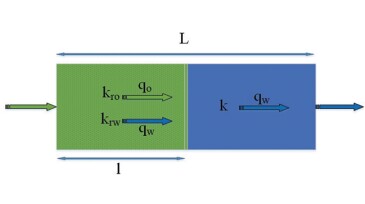
By integrating experimental and mathematical modeling approaches, this work aims to advance the understanding of sand-detachment dynamics and formation instability under varying saturation conditions.

As Egypt’s largest oil and gas investor, Eni is ramping up its 2026–2027 drilling campaign with new investments cross the Mediterranean offshore, Nile Delta, Western Desert, and offshore Sinai to strengthen the country’s role as a regional gas and LNG export hub.
-
 As the discovery rate of new hydrocarbon resources decreases, the need for more-efficient enhanced-oil-recovery processes increases. Unlike in the past, however, when the efficiency was defined in terms of maximizing the recovery factor (RF), the new interpretation of efficiency is based on optimizing the balance between RF and the reduction of carbon footprint.
 -
This paper reveals the potential of an in-situ generated gel system designed with a bionanoparticle that has tunable strength and gelation reversibility in porous media for underground applications.
-
In this study, the authors show that high-temperature, high-salinity polymers can exhibit low adsorption and retention in carbonate reservoir rock at ultrahigh salinity conditions.
-
In this paper, a complete safety-management approach and a contingency plan are developed for carbon dioxide waterless fracturing operations.
-
This paper discusses the field implementation of a downhole chemical methodology that has positively affected overall productivity for a mature Kuwait field.
-
The authors report that nanopolysilicon can be used effectively as a depressurizing, injection-increasing agent.
-
The authors develop and apply a laboratory protocol mimicking leakoff, shut-in, and flowback processes to evaluate the effects of fracturing-fluid additives on oil regained permeability.
-
The application of an extended-release scale-inhibitor in approximately 70 vertical conventional wells in the Permian Basin has shown approximately three times better performance compared to the incumbent chemical.
-
Finding creative ways to drive down the CAPEX and discounted OPEX and define a realistic pathway and schedule to full-scale commercial operations is discussed.
-
Operator will use polymerized water into reservoir to boost oil and gas recovery.