Enhanced recovery

SPE Journal is seeking submissions for a special issue on sustainable enhanced oil recovery (EOR), highlighting innovations that boost oil recovery while reducing CO2 emissions and environmental impact. The Call for Papers opens on 15 October 2026.

By integrating experimental and mathematical modeling approaches, this work aims to advance the understanding of sand-detachment dynamics and formation instability under varying saturation conditions.

As Egypt’s largest oil and gas investor, Eni is ramping up its 2026–2027 drilling campaign with new investments cross the Mediterranean offshore, Nile Delta, Western Desert, and offshore Sinai to strengthen the country’s role as a regional gas and LNG export hub.
-
 As the industry accelerates carbon capture, use, and storage initiatives, modeling innovations for carbon-dioxide injection and enhanced oil recovery have become critical for optimizing recovery and ensuring secure storage. Recent studies highlight a shift toward data-driven and hybrid approaches that combine computational efficiency with operational practicality.
 -
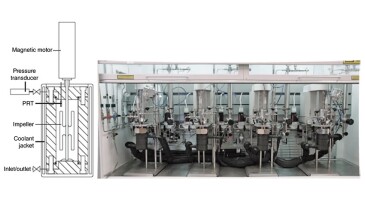
The objective of this microfluidic investigation is to identify and test two novel applications for magnetic fluids in porous media for subsurface oilfield applications.
-
This paper describes a study to design and implement an enhanced oil recovery project via huff ’n’ puff using Y-grade injectant.
-
This study compares water-based chemicals including surfactants, nanoparticles, and ketones that can be used for enhancing the oil recovery of shale-oil reservoirs.
-
Entrepreneurial mindsets with the motivation to explore new materials, not limited to focusing on traditional hydrocarbon gas, carbon dioxide, and chemicals such as polymer and surfactant, are becoming more important for broadening prospects beyond the conventional EOR scene.
-
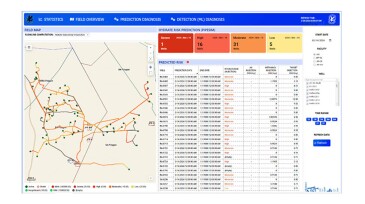
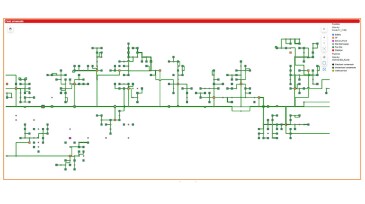
This paper discusses a comprehensive hybrid approach that combines machine learning with a physics-based risk-prediction model to detect and prevent the formation of hydrates in flowlines and separators.
-
This paper explains that the discovery of specific pressure trends, combined with an unconventional approach for analyzing gas compositional data, enables the detection and prediction of paraffin deposition at pad level and in the gathering system.
-
This paper presents an approach to subsea hydrate-risk management based on the understanding that some crudes have induction properties that delay hydrate formation even when the pressure and temperature conditions reach the hydrate thermodynamic region.
-
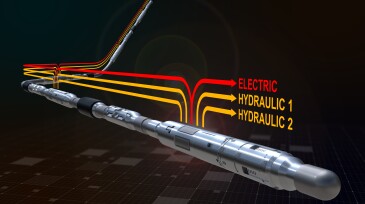
SponsoredSince 1997, intelligent completions have transformed reservoir management, but adoption remains limited due to perceived complexity. The industry reached a pivotal moment with the development of next-generation technologies that address longstanding challenges and offer simpler operation solutions.
-
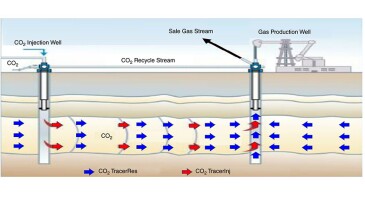
This study explores the feasibility of implementing in-situ carbon dioxide recycling for sequestration as a fit-for-purpose developmental strategy for a Malaysian gas field characterized by an initial carbon-dioxide content of approximately 60%.