Formation evaluation
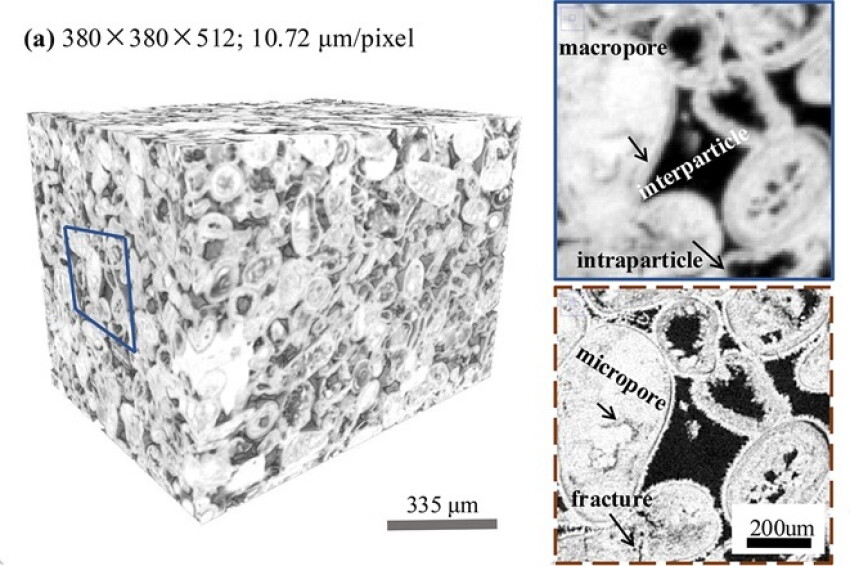
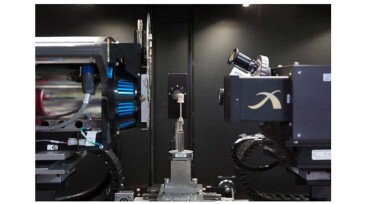
Imaging carbonate rocks at high resolution without losing scale has long been a challenge. A novel framework is introduced that enables accurate super-resolution and extrapolation of carbonate rock images, enhancing micro-CT images while preserving mineralogical and topological features for more reliable pore-scale analysis and flow simulations.

This paper presents an experiment investigating dissolution of basaltic primary minerals and conditions favorable for secondary phase formation under deep subsurface storage conditions.

As several commercial-scale projects are gearing up in the US, developers expect the next few years to reveal whether lithium extraction from brines can become a big business.
-
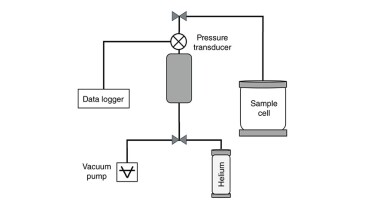
 This paper introduces new methods to perform reliable permeability and saturation-dependent relative permeability measurements in organic-rich mudrock core samples using a pressure-decay setup.
 -
The authors of this paper present a workflow designed to achieve maximum integration between analytical and modeling activities in carbon capture and storage projects.
-
The SPE Reservoir Technical Discipline and Advisory Committee invite their Reservoir members worldwide to participate in a new survey aimed at assessing the current state of reservoir engineering across industry and academia. Deadline is 21 July 2025.
-
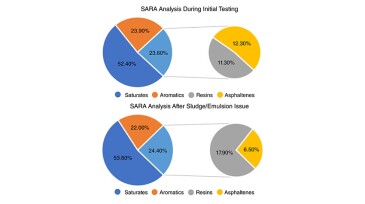
This work investigates the root cause of strong oil/water emulsion and if sludge formation is occurring within the reservoir using a robust integrated approach.
-
Transitioning to a low-carbon economy demands large-scale CO2, natural gas, and hydrogen storage. In this context, the application of AI/ML technology to uncover geochemical, microbial, geomechanical, and hydraulic mechanisms related to storage and solve complicated history-matching and optimization problems, thereby enhancing storage efficiency, has been prominently …
-
The service giant shares new details about its automated fracturing spreads that slash human operator workload by 88%.
-
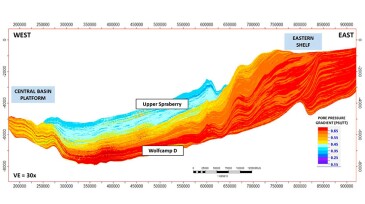
Regional pore-pressure variations in the Leonardian- and Wolfcampian-age producing strata in the Midland and Delaware basins are studied using a variety of subsurface data.
-
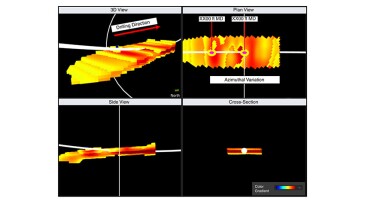
This paper presents a novel workflow for using electromagnetic resistivity-based reservoir mapping logging-while-drilling technologies for successful well placement and multilayer mapping in low-resistivity, low-contrast, thinly laminated clastic reservoirs.
-
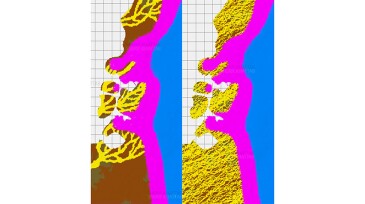
This paper details how the reservoir modeling workflow can be accelerated, and uncertainty reduced, even for challenging greenfield prospects by constructing multiple small fit-for-purpose integrated adaptive models.
-
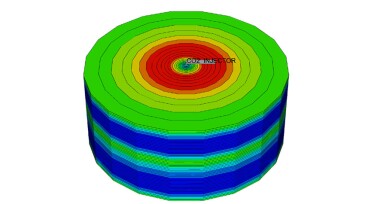
This paper develops a deep-learning work flow that can predict the changes in carbon dioxide mineralization over time and space in saline aquifers, offering a more-efficient approach compared with traditional physics-based simulations.