Formation evaluation
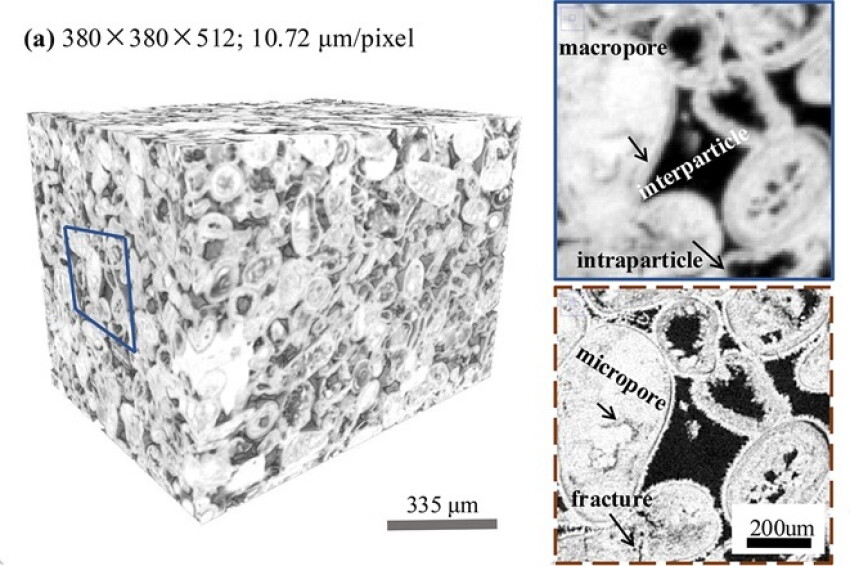
Imaging carbonate rocks at high resolution without losing scale has long been a challenge. A novel framework is introduced that enables accurate super-resolution and extrapolation of carbonate rock images, enhancing micro-CT images while preserving mineralogical and topological features for more reliable pore-scale analysis and flow simulations.

This paper presents an experiment investigating dissolution of basaltic primary minerals and conditions favorable for secondary phase formation under deep subsurface storage conditions.

As several commercial-scale projects are gearing up in the US, developers expect the next few years to reveal whether lithium extraction from brines can become a big business.
-
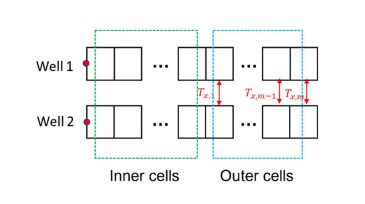
 The authors of this paper propose a hybrid approach that combines physics with data-driven approaches for efficient and accurate forecasting of the performance of unconventional wells under codevelopment.
 -
The authors of this paper propose an artificial-intelligence-assisted work flow that uses machine-learning techniques to identify sweet spots in carbonate reservoirs.
-
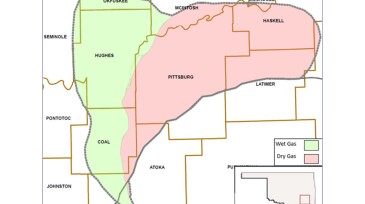
This paper describes an effort to use multiple technologies to better understand an Arkoma Basin reservoir and the interdisciplinary relationship between the reservoir’s subsurface hazards and a stimulation treatment.
-
The main objective of this paper is to investigate the relationship between strain change and pressure change under various fractured reservoir conditions to better estimate conductive fractures and pressure profiles.
-
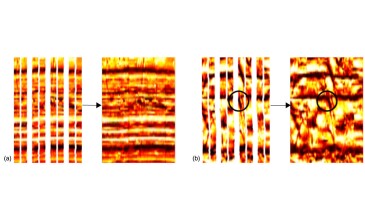
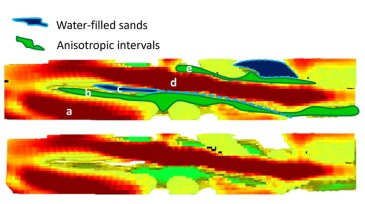
The authors of this paper describe an approach in which all available technologies are combined to improve understanding of reservoir depositional environments.
-
The authors of this paper describe a project aimed at automating the task of cuttings descriptions with machine-learning and artificial-intelligence techniques, in terms of both lithology identification and quantitative estimation of lithology abundances.
-
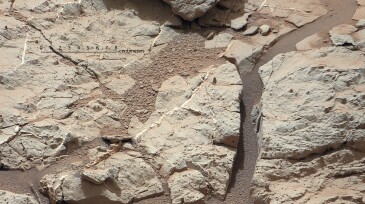
The natural fractures discovered on Mars during rover missions might be so important that they are worth bringing back to Earth.
-
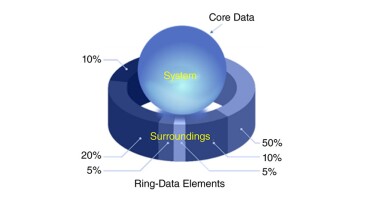
The authors of this paper describe a technology built on a causation-based artificial intelligence framework designed to forewarn complex, hard-to-detect state changes in chemical, biological, and geological systems.
-
Geochemical parameters such as total organic carbon (TOC) provides valuable information to understand rock organic richness and maturity and, therefore, optimize hydrocarbon exploration. This article presents a novel work flow to predict continuous high-resolution TOC profiles using machine learning.
-
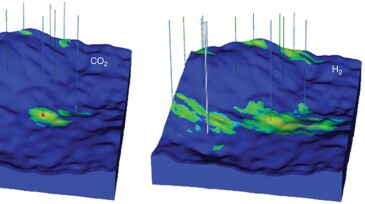
Building up the world’s hydrogen base will need technological breakthroughs and a lot of new demand. But to store it, the world needs reservoir engineers and other subsurface experts.