Fracturing/pressure pumping

Operators struggle to understand proppant placement beyond the fracture, and that’s the information that could be the key to boosting EUR.

High-risk, high-reward projects focused on stimulation, enhanced recovery, and field-scale deployment are eligible under the DOE’s new UNLOCK initiative.

The Seismos full-scale research center opens to industry, universities, and national laboratories, advancing acoustic sensing across upstream energy, pipelines, critical infrastructure, and national security.
-
 This paper describes a hydraulic fracturing pilot project using a technique that generates higher fracture conductivity to reduce the drawdown during production and improve connection through laminations.
-
This paper presents a case study of a North African oil field producing from two Ordovician sands with differing permeabilities where significant benefit was achieved by fracture stimulating one or both intervals in two wells.
-
Fracture monitoring to optimize fluid volumes and designs remains a critical area of development. Research is ongoing with the focus on combining different monitoring technologies including tracers, fiber optics, downhole cameras, and microseismic monitoring.
-
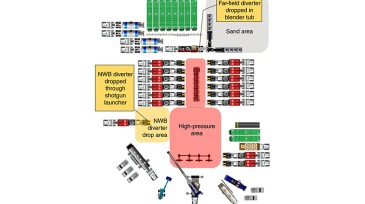
The authors of this paper describe a project in which far-field diverters were pumped to mitigate wellbore sanding and production loss in existing parent wells.
-
Years in the making, the program sponsored by the US Department of Energy is celebrating its latest geothermal energy breakthrough in southwestern Utah.
-
Operators are turning the tide on the Lower Tertiary trend with increasingly large stimulations that are also pushing the limits of offshore technology.
-
Matthew Bryant has spent years trying to convince engineers that the API proppant testing standard has significant limitations. And he may well be right.
-
The Midland-based service company operates a fleet that is now 65% either dual-fuel or electric-powered.
-
The second major deal in the US proppant industry this year will see US Silica go forward as a private company.
-
This paper explains how an operator’s projects in the Vaca Muerta have become more-efficient and cost-effective by increasing production and reducing well-delivery-cycle time while fostering the long-term sustainability of the project.