Fracturing/pressure pumping

The Seismos full-scale research center opens to industry, universities, and national laboratories, advancing acoustic sensing across upstream energy, pipelines, critical infrastructure, and national security.

This article from the SPE Research and Development Technical Section offers new insights to how the upstream industry can benefit from the emergence of quantum computing.

This contributed article highlights the growing importance of fiber-optic sensing and its potential to advance thanks to emerging quantum technologies.
-
 A recent study found that female mice exposed during prenatal development to chemicals used in unconventional oil and gas operations had abnormal mammary glands in adulthood.
 -
Did you know that fracturing is not permitted in parts of the Middle East? And it has been that way for a long time.
-
A professor, whom the EPA charged with reviewing its 2016 study on hydraulic fracturing’s possible effects on drinking water, shared her observations on the process that led to the agency’s final conclusion.
-
A professor who the EPA charged with reviewing its 2016 study on hydraulic fracturing’s possible drinking water impacts shared her observations on the flawed process that led to the agency’s final conclusion.
-
Good reservoir detective work costs money, but two studies show how it can help identify even more expensive problems.
-
Shale operators are working harder to get as much out of new wells as they did from older ones nearby.
-
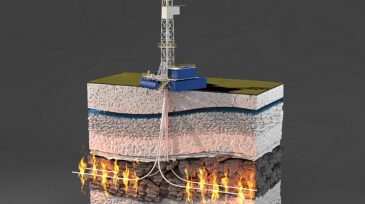
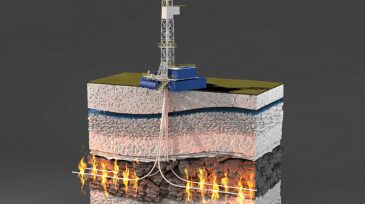
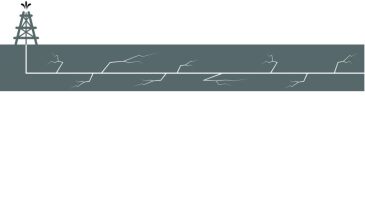
Widely held images of what happens when a well is fractured often bear little resemblance to what actually happens underground.
-
Stanford geoscientists have found a way to detect thousands of tiny tremors around hydraulic fracturing operations that could serve as predictors of eventual larger earthquakes.
-
Stanford geoscientists have found a way to detect thousands of tiny tremors around hydraulic fracturing operations that could serve as predictors of eventual larger earthquakes.
-
SPE Distinguished Lecturer Dan Tormey will present his peer-reviewed study of the environmental effects of hydraulic fracturing during a Web event scheduled for 8 March.