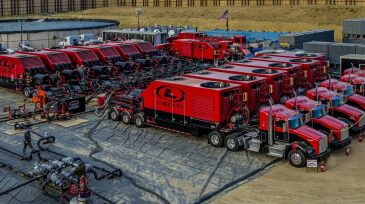
Fracturing/pressure pumping
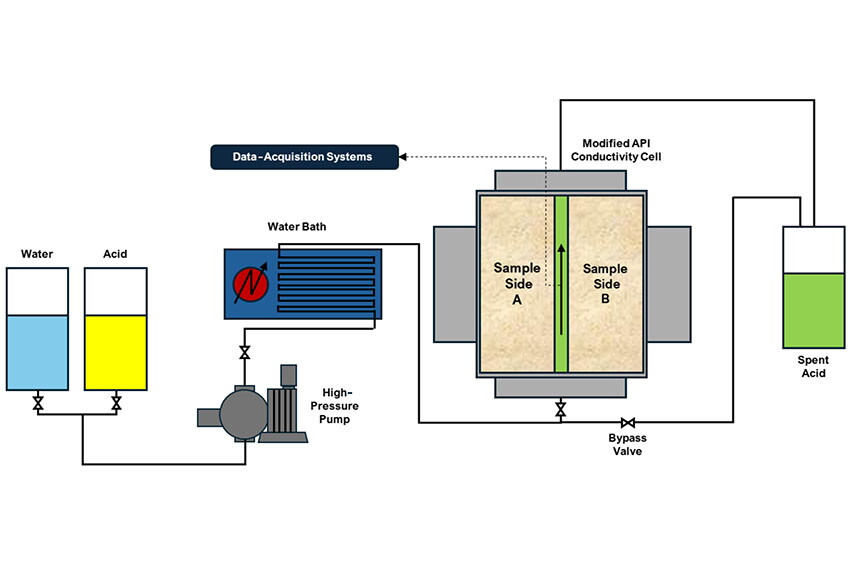
This paper presents findings reinforcing the argument that acid fracturing is a strong alternative stimulation method to improve productivity in the Austin Chalk formation.
Output is rising fast in the South American shale play and putting Argentina on a course to soon reach 1 million B/D.
This case study presents a procedure in which the operator compared production from wells with adjusted wettability to a control group, finding that the adjustments resulted in significant improvements in production and reductions in produced water.
-
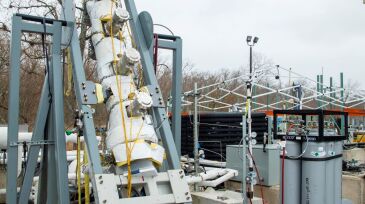
 New Testing Facility Built To Prove Whether Natural-Gas Foam Is Shale Sector's Next Fracturing FluidA 6-year R&D project concludes with the completion of a technology kit designed to study how combining highly pressurized natural gas and water could be a holistic alternative to traditional hydraulic fracturing.
 -
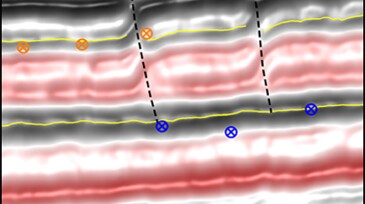
A pressure-monitoring technique using an offset sealed wellbore as a monitoring source has led to advancements in quantifying cluster efficiencies of hydraulic stimulations in real time.
-
Is it possible to fracture a well using power off the grid? The answer is yes, but sharp electric engineers are required.
-
The two-well stimulation approach is delivering big savings to first adopters. A new report from Rystad highlights how the development is taking shape.
-
In striving to boost production of shale gas and tight oil, China is trying enhanced-hydraulic-fracturing technology and real-time data analysis in the Sichuan shale basin. In Daqing’s tight-oil fields, an alternative fracture-completion strategy and post-stimulation flowback technology has been tested.
-
Murphy Oil has created a work flow to normalize the tags it uses when collecting data on its hydraulic fracturing stages. The work flow described here empowers decision makers, who no longer wait for hours to collect data or waste hours cleaning and preparing data for analysis.
-
The all-stock deal doubled Liberty’s working pressure-pumping capacity without adding any debt to its balance sheet, while Schlumberger retains a 37% equity interest.
-
A trio of field studies recently presented at the 2020 SPE Annual Technical Conference and Exhibition highlights in different ways how emerging technology and old-fashioned problem solving are moving the industry needle on proppant and conductivity control.
-
An investigation of casing damage led Chesapeake Energy and Well Data Labs to identify patterns in the treating pressure data that are useful markers when trouble is likely.
-
The complete paper describes the first implementation of a solution to control fracture height for conventional wells in the Pannonian Basin.