HSE & Sustainability

While Uzbekistan has seen a significant drop in flaring, methane leaks from deteriorating infrastructure continue to reveal themselves to satellites in space.

The department announced it plans to combine the Bureau of Offshore Energy Management and the Bureau of Safety and Environmental Enforcement into the Marine Minerals Administration.
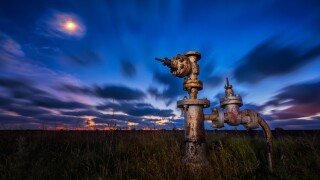
While some idle wells may be brought back into production, many will be plugged and abandoned. This paper considers repurposing certain idle oil and gas wells by using their empty steel casing for the disposal of nuclear waste.
-
 The oilfield service giant said its plans to decarbonize are inclusive of Scope 3 emissions, or the emissions generated when customers use its technologies.
 -
This paper describes a project whose objective was to define a costing methodology that showed indicative costs and effects of recordable safety incidents in an organization. This project’s main aim was to raise awareness, through a cost calculator, of occupational health and safety by placing a measurable dollar value to recordable safety incidents.
-
The US producer is aiming for net-zero greenhouse-gas emissions related to both Scope 1 and Scope 2 categories over the next 3 decades.
-
The midstream operators plan to have the CO2 pipeline network operational as soon as 2025 and flowing at full stream by 2027.
-
The 2020 tally from the International Association of Oil and Gas Producers shows that fatalities decreased from the previous year.
-
If stakeholders take action and initiate dialogue, we may be able to accelerate efforts to make our industry safer.
-
Tropical storms severely affect oil and gas production in the Gulf of Mexico, especially during the storm season from June to December. Offshore well managers often need to shut down operations and evacuate the facility because of storm alerts. The purpose of this paper is to determine the effect of storms on production by quantifying metrics such as downtime days and…
-
Experts from around the world highlight that, while natural gas has an important role to play in the energy transition, it is one that changes from region to region.
-
Norway appears to be taking a dual approach to energy transition. In its just-released energy white paper, the Norwegian government says it is committed to producing renewable energy and bolstering its power grid but isn’t willing to halt development of its oil and gas resources.
-
Bill Gates’ TerraPower teams with Warren Buffett’s PacifiCorp to demonstrate the viability of carbon-free SMRs in Wyoming.