HSE & Sustainability

The department announced it plans to combine the Bureau of Offshore Energy Management and the Bureau of Safety and Environmental Enforcement into the Marine Minerals Administration.
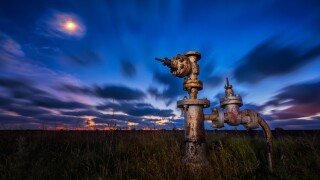
While some idle wells may be brought back into production, many will be plugged and abandoned. This paper considers repurposing certain idle oil and gas wells by using their empty steel casing for the disposal of nuclear waste.
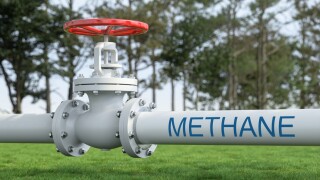
This article from the SPE Methane Technical Section looks at how, as methane regulation becomes more consequential in global oil and gas trade, operators increasingly need emissions data that can withstand commercial scrutiny, regulatory review, and independent verification.
-
 The newly released document outlines the main types of tests available and examines approaches to isolation and quarantine for suspected and confirmed cases of COVID-19 in oil and gas industry workplaces.
 -
The authors write that the road to decarbonization will involve several technologies working in concert, not the use of only one at the expense of others.
-
The author shows that renewable energies are best used in replacing fossil fuels in the power sector, where it has the most effect in reducing CO2 emissions.
-
A 2-year study of a formation used for saltwater disposal in the Bakken may hold promise of decreasing the pressurization of the formation and increasing the reuse of the briny produced water.
-
The authors write that even simple deep-learning architectures can identify a leak using pressure data.
-
We need to analyze the carbon intensity of reserves, the potential emissions that are in front of us, not just the carbon intensity of current operations. An engineering solution associated with production forecasts over time offers a framework for thinking through the carbon-emissions issue.
-
For the entities formerly—and, sometimes, still—known as oilfield service companies, the energy transition presents new business challenges and opportunities. How are they managing?
-
SPE papers and events that covered decarbonization during the past year show that a wide variety of solutions already exist that avoid, reduce, replace, offset, or sequester greenhouse gas (GHG) emissions. It is clear, therefore, that decarbonization technologies will now be as important as 4D seismic, horizontal wells, and hydraulic fracturing.
-
Are you trying to stay up to date about developments aimed at energy transition efforts in our industry? This roundup of news presents some of the recent announcements. Visit SPE’s HSE Now for more news.
-
The oilfield service giant said its plans to decarbonize are inclusive of Scope 3 emissions, or the emissions generated when customers use its technologies.