HSE & Sustainability

This paper presents a flexible, highly cost- and energy-efficient method of gas separation and CO₂ capture from many different gas mixtures with a large range of CO₂ concentrations.

Emissions management covers a wide array of topics such as carbon capture, use, and storage; emissions monitoring; flare management; methods to improve operational efficiency; carbon accounting; and the effect of emissions management on global and local economics. The papers published in the past year span all these subcategories.

This study explores the carbon-capture and mineralization potential of ultramafic rock powders when exposed to flue gases generated from combustion of crude oil and mesquite-derived charcoal.
-
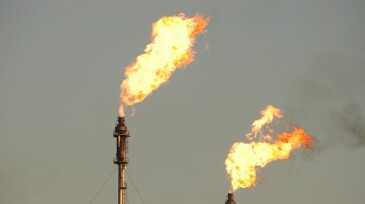
 Satellite data show nearly 45,000 methane plumes worldwide in the first quarter, triple the number from a year earlier.
 -
The publication highlights the role of carbon capture and storage (CCS) in the energy transition and how the oil and gas industry can support the uptake of CCS technologies and presents case studies from Ipieca members.
-
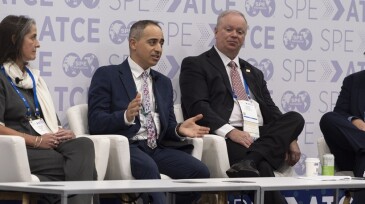
A resilience-based approach to safety was the focus of a panel of experts at the 2025 SPE Annual Technical Conference and Exhibition in Houston.
-
APOGCE 2025 set the stage for strategic dialogues on how Asia Pacific’s upstream industry can innovate, invest, and collaborate to meet growing energy demand while advancing net-zero goals.
-
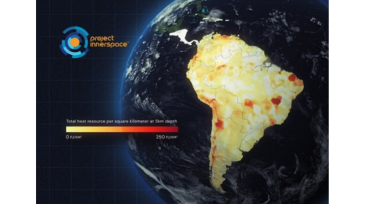
The freely accessible online platform is the latest in a series of maps designed to reveal the continent’s untapped geothermal potential.
-
The Global CCS Institute released its Global Status of CCS 2025 report, which states that the number of operating CCS facilities has grown to 77 with a capability of storing 64 mtpa.
-
Analysts say UK output growth could offset emissions associated with the production of imported LNG while supporting energy security.
-
TotalEnergies and the Danish Underground Consortium complete a 7-year effort to redevelop the Tyra field, lowering emissions and extending field life.
-
A study led by researchers at the Euro-Mediterranean Center on Climate Change improves oil spill trajectory predictions by integrating artificial intelligence with traditional numerical ocean models. The research shows how to obtain more accurate and timely forecasts, enabling faster analyses and scenario testing, which could be a crucial development for emergency res…
-
COP30 in Brazil represents a historic first, with the country being the first COP host to have a national CCUS law, an operating direct air capture plant, a project nearing CO₂ injection for pure geological storage, and more.