HSE & Sustainability

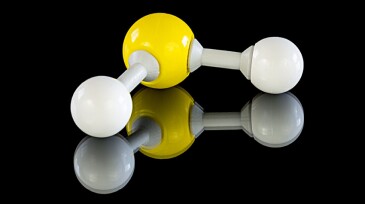
The solvent-based technology involves a modular treatment process that uses a proprietary catalyst designed to safely and sustainably remove hydrogen sulfide (H₂S) from sour gas streams using either produced water or an alkaline water as the treating media.

Emissions management covers a wide array of topics such as carbon capture, use, and storage; emissions monitoring; flare management; methods to improve operational efficiency; carbon accounting; and the effect of emissions management on global and local economics. The papers published in the past year span all these subcategories.

This study explores the carbon-capture and mineralization potential of ultramafic rock powders when exposed to flue gases generated from combustion of crude oil and mesquite-derived charcoal.
-
 The US Environmental Protection Agency has signed a final rule granting the state’s request for primary responsibility for the permitting, compliance, and enforcement of carbon sequestration wells under the Underground Injection Control Program.
 -
Energy storage is essential to a clean electricity grid, but aggressive decarbonization goals require development of long-duration energy storage technologies.
-
The year 2023 contained several important sustainability narratives and trends. Three key ones are the anti-ESG movement, China’s acceleration of a clean economy, and the rise of reporting regulations.
-
This project aimed to identify and report occupational risks on an offshore drilling rig and save reporting and evaluation time by creating AI-generated dashboards.
-
An engineered approach to fracture growth in hydraulic fracturing highlights the successful execution of H2S prevention strategies in North Dakota’s Williston Basin.
-
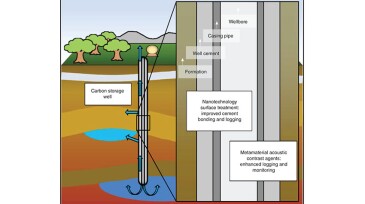
The authors of this paper describe a suite of technologies that enables enhanced well robustness and performance modeling and monitoring of carbon storage facilities.
-
Researchers at Texas A&M University have developed a method of refining "liquid gold" for valuable critical minerals using what many consider traditional waste products: produced water and carbon dioxide.
-
With the advancement of a legal framework for carbon capture and storage, Brazil is building CCS momentum. This article aims to shed light on what led to this momentum and what may come next.
-
The energy company is following decisions by five big shipping firms as Houthi militants step up attacks on vessels.
-
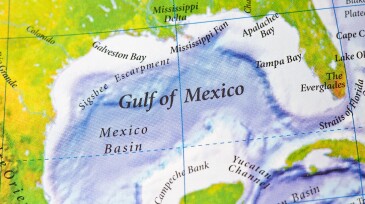
The Gulf region can leverage its energy history, infrastructure, capacity, and expertise to lead the energy transition.