HSE & Sustainability

This paper identifies opportunities and risks associated with repurposing an offshore oil and gas platform for green hydrogen production. Various technical scenarios were investigated for the case study platform, and their profitability was determined using economic calculations. In addition, all the submodels were compared with standard decommissioning costs for reco…

This paper presents a flexible, highly cost- and energy-efficient method of gas separation and CO₂ capture from many different gas mixtures with a large range of CO₂ concentrations.

Emissions management covers a wide array of topics such as carbon capture, use, and storage; emissions monitoring; flare management; methods to improve operational efficiency; carbon accounting; and the effect of emissions management on global and local economics. The papers published in the past year span all these subcategories.
-
 One expert says there needs to be a transfer of safety culture from the traditional energy industry to the newer offshoot of renewables.
 -
A new study that analyzed 17 years of migratory bird-nesting data in Prudhoe Bay, Alaska, revealed that nest survival decreased significantly near high-use oil and gas infrastructure and its related noise, dust, traffic, air pollution, and other disturbances.
-
While personal protective equipment has not traditionally had the technological capabilities to help prevent worker injury due to human error, the latest safety innovations, such as gas detection wearables, can help provide visibility and data-driven insights.
-
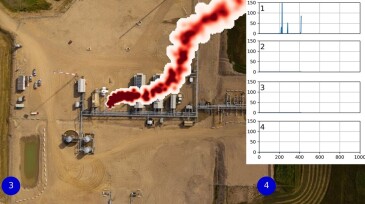
The authors of this paper describe a continuous monitoring system based on the Internet of Things (IoT) to use methane-concentration sensors permanently installed at facilities and connected to a cloud-based interpretation platform.
-
To explore motor vehicle safety, the agency is conducting interviews with workers as well as focus groups with managers and supervisors.
-
The agreement seeks to accelerate the deployment of new technology to produce green and low-carbon hydrogen and graphene.
-
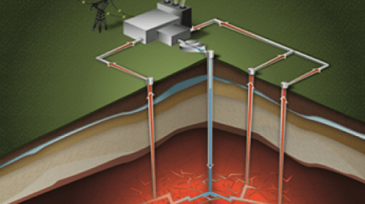
The consortium will leverage the oil and gas industry's 100+ years of experience and technological developments in drilling and subsurface engineering to advance geothermal.
-
Controversial metals-rich nodules sitting on the seafloor could hold the key to increased battery production needed to support the energy transition.
-
The upstream oil and gas industry continues to drive innovation in its quest to solve the monumental challenge of supplying energy to the world in an affordable, secure, and sustainable way.
-
High energy prices and a greater focus on energy security will not slow the world’s long-term ambition for a low‑carbon future. However, annual analysis by DNV believes unprecedented pressure is reinforcing a two‑speed energy transition.