HSE & Sustainability

Located along the North Sea, the Humber is expected to play a central role in the UK’s effort to achieve a net-zero emissions status by 2050.

This article addresses the challenges of managing water-soluble organics (WSOs) in offshore produced water. It provides a brief discussion of the chemistry, along with strategies and technologies that can be used to manage WSO levels in produced water, thus facilitating compliance with regulatory overboard water-quality guidelines.

Spain has granted permits covering a swath of the mountain range to Mantle8 for natural hydrogen and helium exploration a month after France granted the company similar permits.
-
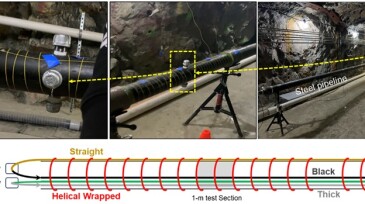
 Unlike traditional inspection methods, distributed fiber-optic sensing offers continuous, real-time monitoring capabilities, allowing for early detection and response to potential leaks, which is especially crucial in remote or inaccessible locations.
 -
The SPE Reservoir Technical Discipline and Advisory Committee invite their Reservoir members worldwide to participate in a new survey aimed at assessing the current state of reservoir engineering across industry and academia. Deadline is 21 July 2025.
-
Technical safety standards are essential as global offshore exploration heats up.
-
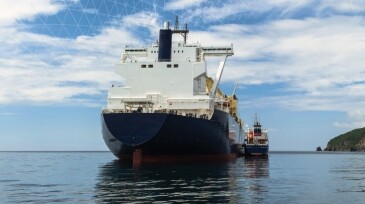
The contractor will deliver a similar carbon dioxide injection system to the one it completed for phase one in 2023.
-
The Carbon Capture, Utilization, and Storage (CCUS) Technical Section is proud to announce the launch of its new eMentoring Program forward-thinking initiative designed to connect young professionals with seasoned experts across the CCUS industry. This virtual mentorship effort aims to fast-track knowledge transfer, foster professional development, and build a stronge…
-
Fawaz Bitar, BP's senior vice president for HSE and carbon, spoke at a recent health, safety, and environment conference in Aberdeen about the importance of health in the industry. Here is a transcript of his speech.
-
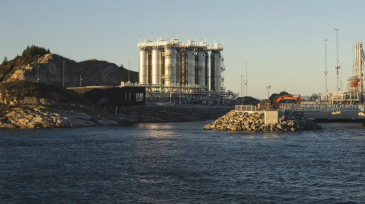
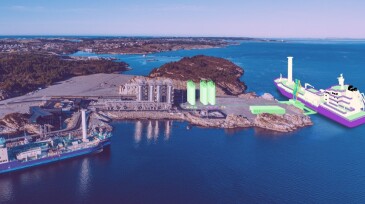
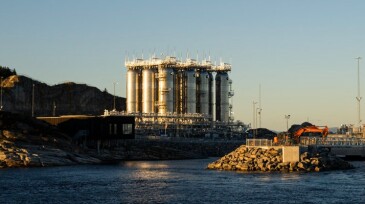
The Norwegian Ministry of Energy has approved the Phase 2 expansion, which is expected to increase carbon dioxide storage capacity from 1.5 million tonnes to 5 million tonnes.
-
The journey to safety excellence is not paved with quick fixes but with deliberate, data-informed strategies.
-
DNV’s carbon capture and storage outlook forecasts a massive shortfall in the projects necessary to help the world reach net-zero emissions by 2050.
-
Nigeria’s Petroleum Industry Act 2021, a Pathway for Economic Prosperity and Sustainable DevelopmentThis paper presents a comprehensive review of the updated regulatory structures, general administration, and functions of regulators to provide a clear focus for industry stakeholders.