HSE & Sustainability
The companies have released the Event Learning Taxonomy CLUE, which aims to improve the understanding of incidents beyond individual blame and toward clearer reporting and increased learning.
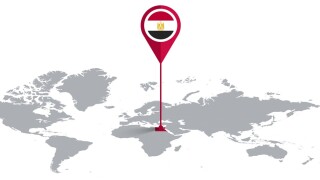
A memorandum of understanding between the companies targets technical services for safety and performance across Egypt’s onshore and offshore assets.

No injuries were reported, and work has been suspended on the North Sea rig while the BOP is recovered.
-
 Scientists have discovered nearly two dozen new types of microbes, many of which use hydrocarbons as energy sources. The scientists suggest that these bacteria could help limit the concentrations of greenhouse gases in the atmosphere and could one day be useful for cleaning oil spills.
 -
The National Institute for Occupational Safety and Health is collaborating with partners in industry, government, academia, and labor and with other stakeholders to achieve successful and sustainable outcomes to improve worker safety and health across the oil and gas extraction industry.
-
Royal Dutch Shell is changing its tune on carbon, saying it will tie executive pay to shorter-term reductions in emissions.
-
While oil and gas are finite, not “renewable” resources, they are still crucially important to building a more sustainable world and will play a major role for a very long time, not only for global economic growth but also for global social development and human lifestyle enhancement.
-
Companies are bringing satellite monitoring to the unconventional oilfield—namely the Permian Basin—where they are training machine learning models to track and predict drilling and completions work.
-
Produced water has been an albatross around the neck of operators for a long time. Efforts to solve its challenges have been extensive and continue to evolve. These efforts can have a strong effect on the profitability of an operation.
-
This paper aims to provide an introduction to the early management of downhole produced water in strong waterdrive reservoirs using inverted electrical-submersible-pump (ESP) technology.
-
This paper presents pilot-testing results and economics from a novel electrochemical desalination technology for enhanced oil recovery (EOR) produced water.
-
The Acorn Project will capture about 200,000 tonnes of carbon dioxide from the St. Fergus Gas Terminal and transport it for storage to one of three depleted gas fields using existing pipelines.