HSE & Sustainability
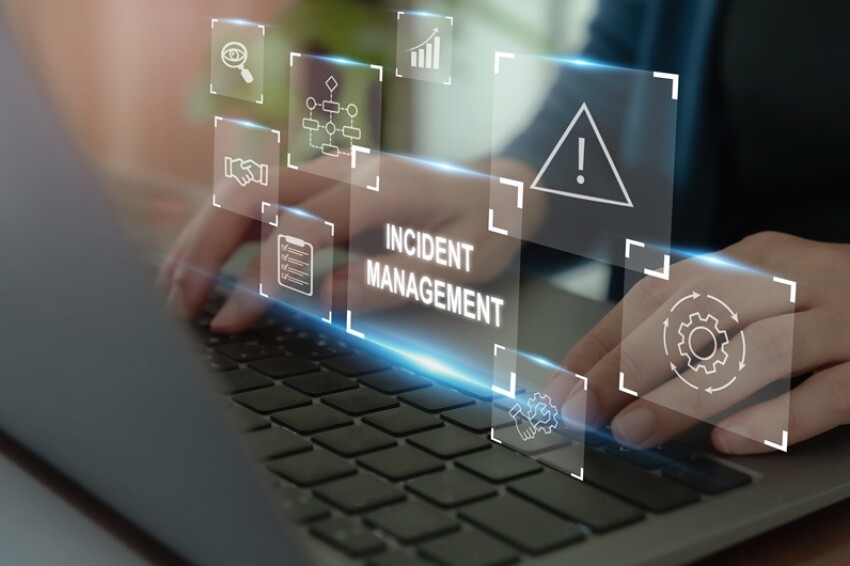
The companies have released the Event Learning Taxonomy CLUE, which aims to improve the understanding of incidents beyond individual blame and toward clearer reporting and increased learning.
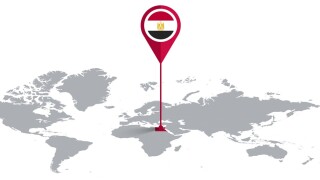
A memorandum of understanding between the companies targets technical services for safety and performance across Egypt’s onshore and offshore assets.

No injuries were reported, and work has been suspended on the North Sea rig while the BOP is recovered.
-
 The tool, called the Field Analysis of Silica Tool, works with commercially available Fourier-transform infrared analyzers to determine a worker’s exposure to respirable crystalline silica dust, providing detailed results immediately following a worker’s shift.
 -
An online seminar set for 14 November will introduce IPIECA's new Community Liaison Officers Team Building and Management Guidance.
-
Elevated concentrations of strontium, an element associated with oil and gas waste waters, have accumulated in the shells of freshwater mussels downstream from wastewater disposal sites, according to researchers from Penn State and Union College.
-
The UK’s offshore oil and gas industry continued to see improvement across a broad range of health and safety indicators last year, according to a key insight published by Oil & Gas UK.
-
Colorado's Proposition 112 would increase the minimum distance required between new oil and gas wells and homes, schools, and other designated areas to 2,500 ft—more than twice the current required distance — in an effort to protect public health.
-
A new study offers answers to questions that have puzzled policymakers, researchers,and regulatory agencies for decades: How much methane is being emitted from natural gas operations across the US? And why have different estimation methods seemed to disagree?
-
Some of these technologies can be deployed now, but additional ones are needed to meet climate goals.
-
Engineers from the Monterey Bay Aquarium Research Institute have demonstrated a new use for the institute's long-range autonomous underwater vehicles—detecting and tracking oil spills.
-
Remotely measuring the activity of extractive industries in conflict-affected areas that do not have reliable administrative data can support a broad range of public policy and decisions and military operations.
-
The International Association of Oil and Gas Producers has updated its set of Life-Saving Rules to simplify and improve them. The organization’s Report 459 now lists nine rules designed to protect workers in the oil and gas industry from fatalities.