HSE & Sustainability

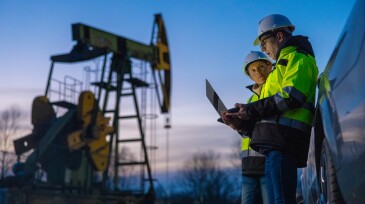
Winners of Alberta's Drilling Technology Challenge cover a range of technologies from robotics to enhance drilling rig safety to AI-enabled energy management, downhole sensing, well navigation, hybrid power systems, and geothermal energy.

Located along the North Sea, the Humber is expected to play a central role in the UK’s effort to achieve a net-zero emissions status by 2050.

This article addresses the challenges of managing water-soluble organics (WSOs) in offshore produced water. It provides a brief discussion of the chemistry, along with strategies and technologies that can be used to manage WSO levels in produced water, thus facilitating compliance with regulatory overboard water-quality guidelines.
-
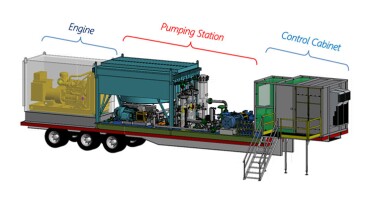
 This article describes a technology combining a compression unit with a flexible line to offer a flaring alternative for transferring hydrocarbons.
 -
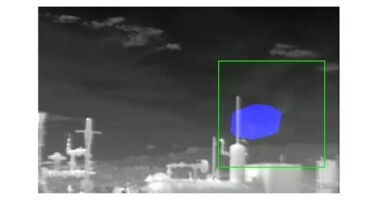
This paper describes a deep-learning image-processing model that uses videos captured by a specialized optical gas-imaging camera to detect natural gas leaks.
-
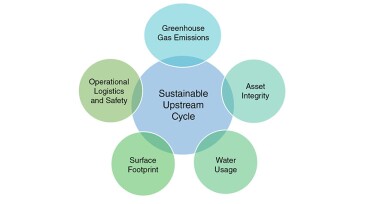
This paper explores the sustainability and safety aspects of laser perforation with a focus on factors such as water requirement, asset integrity, logistics, safety, and surface footprint.
-
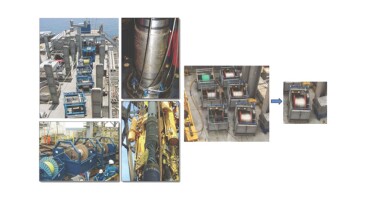
This paper describes an intelligent completion system in the context of multiple wells that, by electrifying the process, replaces the conventional electrohydraulic systems that have been in use for decades.
-
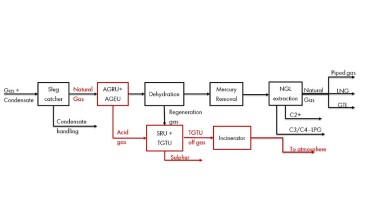
This paper aims to provide insights to address the challenge of identifying the optimal point within the gas-processing lineup for recovering a high-purity CO₂ stream suitable for sequestration.
-
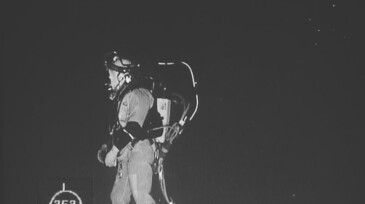
TechnipFMC diver Stuart Cowie shares his 17-year experience working as a saturation diver in the oil and gas industry and how to manage mental health and well-being during the often-isolating work demands.
-
The revised report provides upstream oil and gas operators with a framework and guidelines to help select and deploy methane emissions detection and quantification technologies.
-
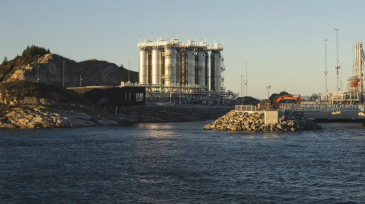
The first phase of the Norwegian project is expected to receive its first carbon dioxide this year, with the second phase slated to start operations in late 2028.
-
This paper introduces a novel optimization framework to address CO2 injection strategies under geomechanical risks using a Fourier neural operator-based deep-learning model.
-
This paper analyses the Global Biodiversity Framework and its relevance to the transitioning energy system, documenting the work that has been completed and that which is still ongoing.