HSE & Sustainability
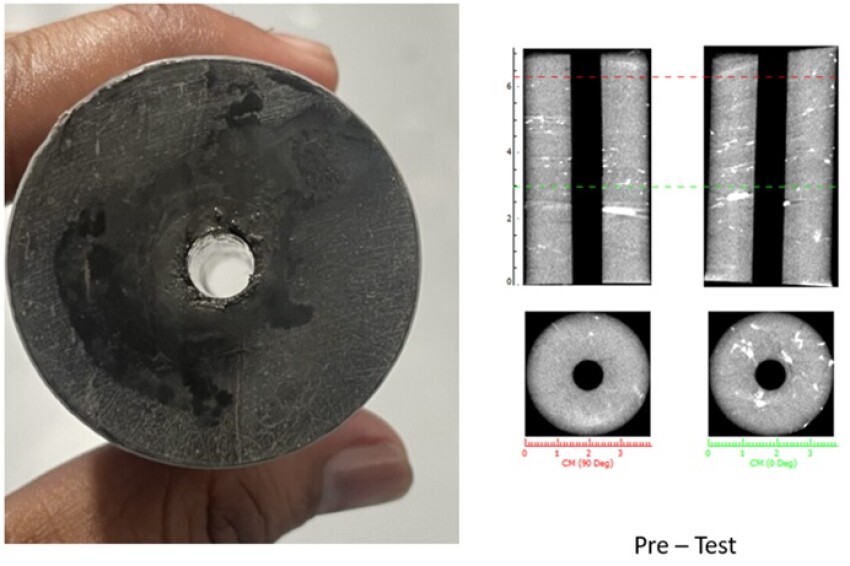
An investigative study examines the use of creeping shale formations as a more durable alternative to conventional cement barriers in carbon dioxide storage wells, potentially enabling safer long-term underground carbon storage.

The companies have released the Event Learning Taxonomy CLUE, which aims to improve the understanding of incidents beyond individual blame and toward clearer reporting and increased learning.

A memorandum of understanding between the companies targets technical services for safety and performance across Egypt’s onshore and offshore assets.
-
 The SPE technical director of Production and Facilities discusses the role process and occupational safety play in oil and gas operations.
 -
Scientists have developed oxidized carbon particles that extract radioactive metals, such as cesium and strontium, from water. They said the materials may help purify contaminated waters stored after the Fukushima nuclear power plant accident and also can trap common radioactive elements found in waterfloods from oil extraction, such as uranium, thorium, and radium,
-
The City Council of Lafayette, Colorado, on 17 January voted to table an anti-hydraulic-fracturing ordinance that could impede oil and gas development within Lafayette through sanctioning acts of civil disobedience and nonviolent protest.
-
The Hail 3D transition-zone seismic survey carried out by ADNOC is located in a UNESCO world-biosphere reserve. Effective environmental and ecological management throughout the project was attained through working procedures and monitoring programs.
-
Various incidents that took place between Transocean, the owner of Deepwater Horizon, and BP, the company that leased the rig for use at Macondo, illustrate the gap between work-as-imagined in the drilling program and work-as-done by the well operations crew.
-
Various industry experts discussed the progress of an initiative led by SPE and BSEE to develop a safety data-sharing framework to help mitigate potential risk in operations.
-
Approaches to integrated investigative testing and root cause identification are discussed to prevent solid emulsions from stabilizing to impair flowlines and other field infrastructure.
-
A number of ongoing industry research projects are developing nanoparticles that work at the reservoir level and for fluid treatment. Though they may be a few years away from finalization, these efforts highlight nanotechnology’s increasingly sophisticated and growing application scope.
-
This article is a summary of the 2016 follow-up paper on carbon capture and sequestration, one of the five grand challenges to the industry identified by the SPE R&D Committee in 2011.
-
One of Oklahoma’s top government officials announced recently that it could be many more months before the full scope of the state’s regulatory response plan for induced seismicity is proven effective.