HSE & Sustainability
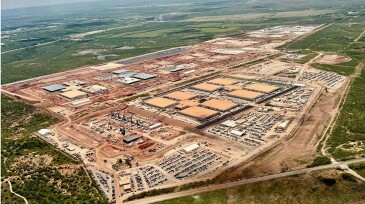
The Pawnee Carbon Sequestration Project, which would use a repurposed well, is planned to capture and store up to 400,000 tonnes of carbon dioxide, with first injection targeted for early 2027.

DNV notes that energy and industrial process-related carbon emissions will have dropped by 2050 by only 44% from today’s level, not even halfway to the net-zero pledge envisioned by the Paris climate agreement.

SPE's new Asset Integrity Technical Section brings together industry experts to advance best practices in reliability engineering, asset integrity, risk reduction, and infrastructure performance. The global community will focus on the safe, reliable, and sustainable operation of energy assets across both traditional and emerging energy sectors.
-
 A study led by researchers at the Euro-Mediterranean Center on Climate Change improves oil spill trajectory predictions by integrating artificial intelligence with traditional numerical ocean models. The research shows how to obtain more accurate and timely forecasts, enabling faster analyses and scenario testing, which could be a crucial development for emergency res…
-
COP30 in Brazil represents a historic first, with the country being the first COP host to have a national CCUS law, an operating direct air capture plant, a project nearing CO₂ injection for pure geological storage, and more.
-
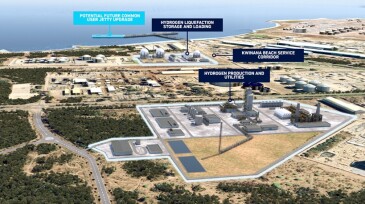
Australia’s H2Perth blue and green hybrid hydrogen project is expected to benefit from carbon credits from the offshore Bonaparte carbon storage facility where Inpex and TotalEnergies are drilling appraisal wells together with Woodside.
-
The carbon capture and storage system is expected to transport and store up to 680,000 tonnes of carbon dioxide per year in Louisiana.
-
Emissions management remains an active and crucial research area in the oil and gas industry. It is a broad research category spanning several different directions. The papers of the past year demonstrate the rich diversity of ideas and analytical techniques used for tackling different research questions in this space.
-
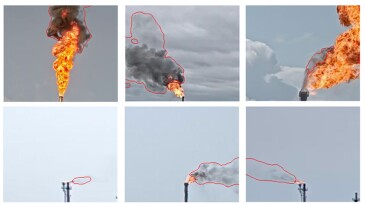
This paper focuses on developing a model that can be used in an automated, end-to-end flare-smoke detection, alert, and distribution-control solution that leverages existing flare closed-circuit television cameras at manufacturing facilities.
-
This study recommends favoring the combustion of ammonia over hydrogen for the purpose of reducing CO₂ and nitrogen emissions.
-
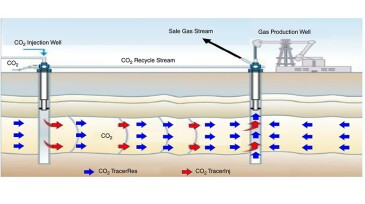
This study explores the feasibility of implementing in-situ carbon dioxide recycling for sequestration as a fit-for-purpose developmental strategy for a Malaysian gas field characterized by an initial carbon-dioxide content of approximately 60%.
-
With artificial intelligence and online training both on the rise, it's crucial to ensure workers and companies treat safety as more than a box-checking exercise.
-
The technology to desalinate and reuse produced water for cooling AI data centers in the Permian Basin exists, but addressing cost challenges remains critical to widespread adoption.