HSE & Sustainability
The Pawnee Carbon Sequestration Project, which would use a repurposed well, is planned to capture and store up to 400,000 tonnes of carbon dioxide, with first injection targeted for early 2027.

DNV notes that energy and industrial process-related carbon emissions will have dropped by 2050 by only 44% from today’s level, not even halfway to the net-zero pledge envisioned by the Paris climate agreement.

SPE's new Asset Integrity Technical Section brings together industry experts to advance best practices in reliability engineering, asset integrity, risk reduction, and infrastructure performance. The global community will focus on the safe, reliable, and sustainable operation of energy assets across both traditional and emerging energy sectors.
-
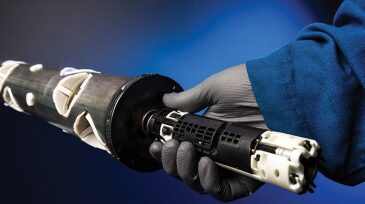
 Accidental detonation of a perforating gun at surface can have catastrophic consequences. To decrease risks, layers of procedural controls have been implemented to reduce the inadvertent application of power caused by human error, stray voltage, or the presence of radio frequency (RF) energy.
-
The recently issued SPE technical report Getting to Zero and Beyond: The Path Forward highlights the “how to” for the industry to achieve zero incidents, zero harm, and zero impact.
-
Oil-producing countries are adopting a variety of strategies to shield their industries from climate action, seeking not just to survive but to recast their businesses in ways that provide competitive advantages, according to a paper by an expert at the Center for Energy Studies at Rice University.
-
In the dry, dusty plains of West Texas, home to America’s most prolific oil play, the problem isn’t too little water. It’s too much.
-
DNV GL has published a paper to support the safe use of artificial intelligence. The paper asserts that data-driven models alone may not be sufficient to ensure safety and calls for a combination of data and causal models to mitigate risk.
-
Though many people understand that employers have workplace responsibilities regarding their employees' health and safety, far fewer understand that the employees also have certain legal obligations they must meet.
-
Three companies are collaborating to develop the equipment needed to make LNG a feasible alternative fuel for ship owners and operators.
-
Even with the wealth of experience already in place within the oil and gas industry, the obstacles to advancing CCS to the forefront of greenhouse gas mitigation technologies remain significant.
-
Each year, six technical papers are selected to give an overview of the state of the health, safety, and environment discipline in the oil and gas industry. Synopses of the papers are presented here with links to the complete papers and suggestions for further reading.
-
A pilot project demonstrates that facilities design plays an important role in providing sources of CO2 for the gas-handling process for injection into a carbonate formation as a tertiary recovery mechanism.