HSE & Sustainability
The Pawnee Carbon Sequestration Project, which would use a repurposed well, is planned to capture and store up to 400,000 tonnes of carbon dioxide, with first injection targeted for early 2027.

DNV notes that energy and industrial process-related carbon emissions will have dropped by 2050 by only 44% from today’s level, not even halfway to the net-zero pledge envisioned by the Paris climate agreement.

SPE's new Asset Integrity Technical Section brings together industry experts to advance best practices in reliability engineering, asset integrity, risk reduction, and infrastructure performance. The global community will focus on the safe, reliable, and sustainable operation of energy assets across both traditional and emerging energy sectors.
-
 The oil and gas industry must learn to engage with local citizens better if it is to build upon its social license to operate. A joint PFC/HSE luncheon during ATCE addressed this topic.
-
The SPE Trinidad and Tobago Section recently hosted an Applied Technology Workshop (ATW) on oil and gas effluent discharge management that brought together those responsible for generating effluent discharges, regulators, and those creating treatment technologies
-
There is no denying that the oil and gas industry, as well as the agencies that regulate its activities, have significantly improved many aspects of environmental performance. Despite this progress, there is always more to be done to identify and manage risks associated with oil and gas development.
-
Emissions are in the air and in the headlines every day. With growing regulations around all types of air emissions, are there ways that industry can deploy technologies cost-effectively in the current environment?
-
In a down market, plugging and abandoning North Sea wells looks like an opportunity. The cost for operators is reduced because the government is paying more than half of the cost of the work, and many service companies hungry for work are offering discounts.
-
Nontechnical risks, primarily around HSE or social responsibility, increasingly pose risks to project timelines. To manage these risks, companies are seeking systems that can ensure quality performance in these operational areas.
-
The authors discuss the results of a pilot project to capture post-combustion CO2 for purposes of EOR.
-
Produced water from chemical floods can cause problems for separation and water treatment equipment due to the polymers and surfactants used. Challenges are greater offshore where space limitations can affect treatment options.
-
If there is a discipline where current conceptual research and technology development expand simultaneously, involving highly interconnected people, it is health, safety, security, environment, and social responsibility.
-
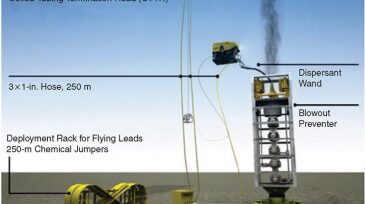
Total organized and ran a large exercise to check the ability to efficiently define, implement, and manage the response to a major oil spill resulting from a subsea blowout.