HSE & Sustainability

This paper presents an approach to the identification, selection, and implementation of initiatives for sustainable water management, withdrawal reduction, and water valorization.

This paper presents an experiment investigating dissolution of basaltic primary minerals and conditions favorable for secondary phase formation under deep subsurface storage conditions.

This study aims to investigate the efficacy of chemical additives strontium chloride and barium hydroxide in accelerating CO₂ trapping mechanisms, their effect on dissolution of carbonate-bearing minerals, and resulting poroelastic changes in the host rock.
-
 B3 Insight and Nanometrics plan to integrate data from seismic monitoring with a water and subsurface data analytics platform.
 -
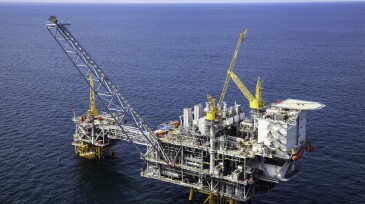
This article is the second of a two-part series on produced-water management in the Gulf of Mexico and covers four themes: equipment, process configuration, operations, and effluent quality.
-
The new burner, created with the help of machine learning and additive manufacturing, promises high methane destruction efficiency and combustion stability even in windy conditions.
-
Transitioning to a low-carbon economy demands large-scale CO2, natural gas, and hydrogen storage. In this context, the application of AI/ML technology to uncover geochemical, microbial, geomechanical, and hydraulic mechanisms related to storage and solve complicated history-matching and optimization problems, thereby enhancing storage efficiency, has been prominently …
-
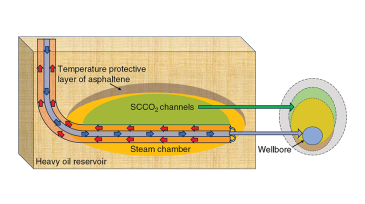
This paper presents a comprehensive model of geothermal exploitation for depleted deep heavy oil reservoirs through supercritical CO₂ injection.
-
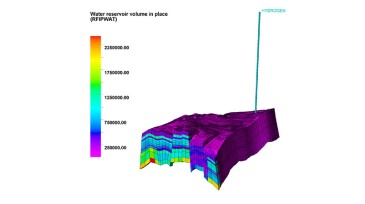
This paper aims to investigate the use of an optimization workflow to maximize both hydrogen storage and the net present value to obtain an optimal reservoir development strategy.
-
This paper describes how ramp-up operations and commercialization of an underground storage asset were combined, rapidly providing a wide range of commercial services to the Italian gas system while long-term UGS performance increased continuously.
-
The authors introduce a novel framework combining dynamic mode decomposition, a data-driven model-reduction technique, with direct data assimilation to streamline the calibration of carbon-dioxide plume evolution models.
-
Geothermal systems, which rely on extracting heat from deep within the Earth, face many of the same technical challenges that oil and gas operators have tackled for decades. Geothermal development can be advanced efficiently and economically by applying proven oil and gas technologies.
-
With an increasing focus on clean energy, sustainable operations, emissions reduction, and data integration, the global energy landscape is evolving. Hence, overcoming HP/HT challenges is critical to ensuring energy security, optimizing production, and pacing our transition.