HSE & Sustainability
The Pawnee Carbon Sequestration Project, which would use a repurposed well, is planned to capture and store up to 400,000 tonnes of carbon dioxide, with first injection targeted for early 2027.

DNV notes that energy and industrial process-related carbon emissions will have dropped by 2050 by only 44% from today’s level, not even halfway to the net-zero pledge envisioned by the Paris climate agreement.

SPE's new Asset Integrity Technical Section brings together industry experts to advance best practices in reliability engineering, asset integrity, risk reduction, and infrastructure performance. The global community will focus on the safe, reliable, and sustainable operation of energy assets across both traditional and emerging energy sectors.
-
 The North Sea Transition Authority says that top-quality environmental, social, and governance (ESG) disclosure is crucial to attracting further investment into the UK’s oil and gas industry.
-
The 12-well campaign is expected to accelerate global adoption of electric subsea technology and reduce emissions from subsea operations.
-
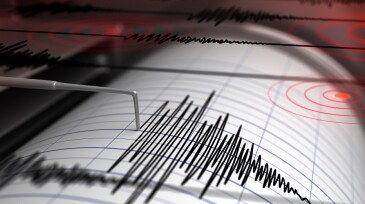
A series of temblors in the region has been linked to oil and gas extraction processes.
-
The HSE executive is urging offshore companies to take a closer look at human factors after inspectors formed the opinion that Apache failed to fully consider human factors as part of its plans to prevent a fire and explosion on one of its North Sea platforms.
-
The company behind a 42-mile sand conveyor system is now leaning into autonomous vehicles for proppant logistics.
-
This paper presents how one operator has developed a culture of circular decommissioning with the main goal of setting up a structured process to improve environmental performance by implementing the principles of a circular economy during decommissioning.
-
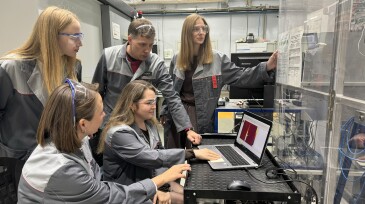
The process developed by Moscow’s Skolkovo Institute of Science and Technology shows promising results in the laboratory, suggesting a novel method to produce hydrogen from natural gas reservoirs while trapping carbon in permanent storage.
-
Reducing greenhouse-gas emissions with geologic carbon storage will require a new way to model rock physics.
-
A new article offers a comprehensive review of worldwide energy transitions to carbon neutrality and introduces the Decarbonization Index, an innovative indicator designed to gauge the progress of a nation’s energy transition.
-
The settlement to reduce emissions in North Dakota includes the largest ever Clean Air Act stationary source penalty and is expected to result in the reduction of more than 2.3 million tons of pollution.