HSE & Sustainability
The Pawnee Carbon Sequestration Project, which would use a repurposed well, is planned to capture and store up to 400,000 tonnes of carbon dioxide, with first injection targeted for early 2027.

DNV notes that energy and industrial process-related carbon emissions will have dropped by 2050 by only 44% from today’s level, not even halfway to the net-zero pledge envisioned by the Paris climate agreement.

SPE's new Asset Integrity Technical Section brings together industry experts to advance best practices in reliability engineering, asset integrity, risk reduction, and infrastructure performance. The global community will focus on the safe, reliable, and sustainable operation of energy assets across both traditional and emerging energy sectors.
-
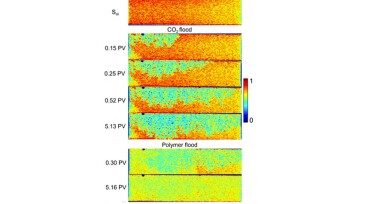
 In this paper, the authors propose polymer-assisted water-alternating-gas (WAG) injection as an alternative method to reduce gas mobility while reducing the mobility of the aqueous phase and, consequently, improving WAG performance.
-
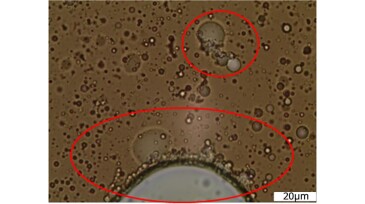
The authors of this paper study the effect of solids particles on oil/water separators and on produced-water treatment.
-
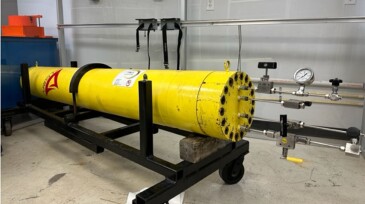
This study emphasizes the vital need to evaluate well conditions and working-fluid compatibility with coiled tubing materials to prolong coiled tubing operational life.
-
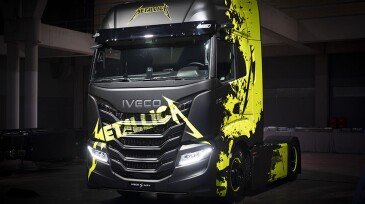
A new kind of groupie is interested in the heavy metal band Metallica’s tour in Europe, including Shell, big-rig and electric vehicle manufacturers, and producers of hydrogen, biofuels, and LNG. It has less to do with the music than the alternative fuels keeping the buses rolling on the 2-month, 7,200-mile journey across nine countries.
-
Definition and call for participation in the 11th Society of Petroleum Engineers Comparative Solution Project, which is motivated by the immense challenge of achieving geological carbon storage at a scale that impacts significantly atmospheric emission of carbon dioxide.
-
Years in the making, the program sponsored by the US Department of Energy is celebrating its latest geothermal energy breakthrough in southwestern Utah.
-
A new report finds the need for political, regulatory, and fiscal alignment to ensure a just and fair transition.
-
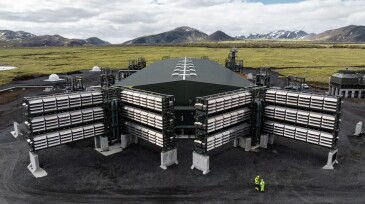
The plant is designed for a capture capacity of up to 36,000 tons of CO₂ per year once in full swing by filtering CO₂ from the air and storing it permanently underground. The company is also developing multiple megaton hubs in the US.
-
The companies are combining their technologies in an effort to help upstream oil and gas operators monitor, report, and reduce emissions.
-
A recent study by researchers from the University of Strathclyde and published in Renewable and Sustainable Energy Reviews found injury rates for workers in offshore wind up to four time that of offshore oil and gas workers.