HSE & Sustainability

The AI revolution isn't just digital. This article examines how geology underpins the convergence of AI, energy, carbon management, and the infrastructure powering frontier LLMs.

Winners of Alberta's Drilling Technology Challenge cover a range of technologies from robotics to enhance drilling rig safety to AI-enabled energy management, downhole sensing, well navigation, hybrid power systems, and geothermal energy.

Located along the North Sea, the Humber is expected to play a central role in the UK’s effort to achieve a net-zero emissions status by 2050.
-
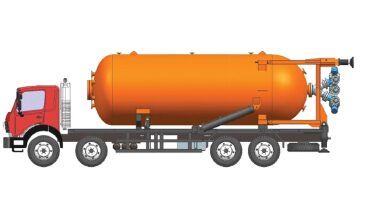
 Carbon dioxide (CO2) waterless fracturing uses liquid CO2 to replace water as the fracturing fluid in reservoir stimulation. The continuity and reliability of the blender are key factors determining performance of the operation.
 -
The complete paper describes an advanced Rankine cycle process-based system that converts waste heat into usable electrical power to improve the efficiency of gas-compression stations on gas-production platforms and pipelines.
-
Approaches to carbon abatement using petroleum are discussed that have a strong chance to succeed in fulfilling technological and economic goals in reducing carbon.
-
If we must reduce emissions to make our industry “greener,” what are some of the options that we can apply?
-
Two technologies that may play a part in the decarbonization of the UK energy business are carbon capture, use, and storage and the use of hydrogen for energy transportation and storage. This approach builds on the UK’s gas-network infrastructure, which can be repurposed to avoid becoming stranded.
-
The Hydrogen Offshore Production project identifies an alternative to decommissioning by providing reuse options for offshore infrastructure. It aims to prove the feasibility of decentralized hydrogen generation, storage, and distribution to provide a bulk hydrogen solution.
-
The paper reviews the types of renewable energy used in oil and gas fields that have appeared in the literature. Use of renewables offers many advantages, including saving hydrocarbon resources, minimizing the oil industry’s GHG emissions, and enhancing its public image.
-
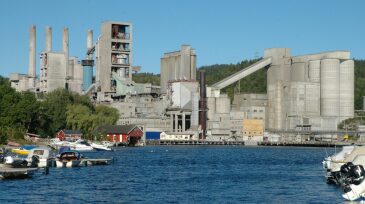
An independent study pegged the cost of the project at about $2.6 billion, 80% of which Norway’s government planned to fund. The ministry said there is uncertainty about Northern Lights’ benefits and that it could prove to be unprofitable.
-
Operations during the COVID-19 pandemic and actions to decarbonize operations are among the highlights.
-
The White House review of proposed rules for an expanded credit for capturing and storing carbon dioxide resulted in changes that give the IRS more time to take back the credits in case of carbon leaks.