HSE & Sustainability

The AI revolution isn't just digital. This article examines how geology underpins the convergence of AI, energy, carbon management, and the infrastructure powering frontier LLMs.

Winners of Alberta's Drilling Technology Challenge cover a range of technologies from robotics to enhance drilling rig safety to AI-enabled energy management, downhole sensing, well navigation, hybrid power systems, and geothermal energy.

Located along the North Sea, the Humber is expected to play a central role in the UK’s effort to achieve a net-zero emissions status by 2050.
-
 The National Institute for Occupational Safety and Health has developed an evidence-based method that uses the criteria of "burden," "need," and "impact" to identify research priorities.
 -
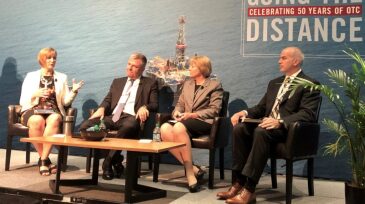
Digitalization and new technologies are disrupting old practices and shaping a new safety landscape for the oil and gas industry. At OTC, a panel sponsored by the Center for Offshore Safety looked at the effects of some of these new technology trends.
-
Behavior is neutral. This simple mantra will set your safety program free of the dysfunctions that kill your safety culture. Behavior is not right or wrong, good or bad. It just is. Approach behaviors with the dispassionate, objective view of a scientist.
-
There is more carbon dioxide in the atmosphere than there has been for 800,000 years—since before our species evolved.
-
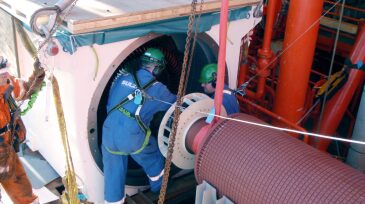
Despite the challenges of working in the offshore environment, Sulzer Wood has recently recorded 9 years without a lost-time incident, which equates to approximately 1.5 million man-hours.
-
The Bureau of Safety and Environmental Enforcement says its final well-control rule removes unnecessary regulatory burdens to responsible offshore development while maintaining safety and environmental protection.
-
The 2020 SPE International Conference on Health, Safety, the Environment, and Sustainability, which is set for 17–19 March in Bogotá, Colombia, is seeking papers. The theme of the conference is “Generating Pride and Enabling Engagement,” and the deadline for submissions is 18 June.
-
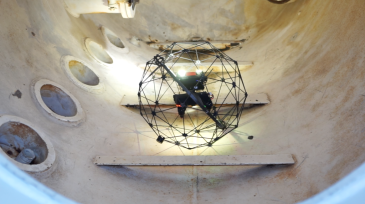
Advances in robotics can revolutionize the way maintenance, inspection, and testing is performed, making operations safer by reducing exposure of personnel to hazards. This paper analyzes the causes of slow industry adoption of robotic technologies and presents a roadmap for accelerated adoption.
-
This paper demonstrates a new way to create gas-tight seals during well abandonment, overcoming the limitations of traditional methods and reducing the operator’s liability and potential environmental impact after decommissioning has been completed.
-
This paper explains how an ultradeepwater drilling contractor is applying real-time analytics and machine learning to leverage its real-time operations center to improve process safety and performance.