HSE & Sustainability

The AI revolution isn't just digital. This article examines how geology underpins the convergence of AI, energy, carbon management, and the infrastructure powering frontier LLMs.

Winners of Alberta's Drilling Technology Challenge cover a range of technologies from robotics to enhance drilling rig safety to AI-enabled energy management, downhole sensing, well navigation, hybrid power systems, and geothermal energy.

Located along the North Sea, the Humber is expected to play a central role in the UK’s effort to achieve a net-zero emissions status by 2050.
-
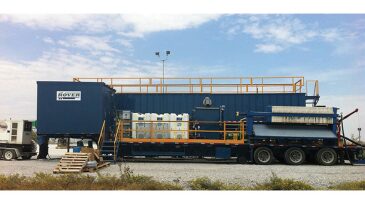
 In this second article of a series covering water management in hydraulic fracturing (HF) in unconventional resources, the properties and characteristics of the flowback fluids are discussed, together with the general categories of technologies that are best suited to treat them.
 -
OTC recognized three figures who have contributed to facilities engineering: Dendy Sloan, Jim Brill, and Ken Arnold. They were recognized with the Distinguished Achievement Awards for their technical and leadership contributions to the industry.
-
Several geological settings are appropriate for geological storage of carbon dioxide (CO2), including depleted oil and gas reservoirs, deep brine-saturated formations, CO2-flood enhanced-oil-recovery (EOR) operations, and enhanced coalbed-methane recovery.
-
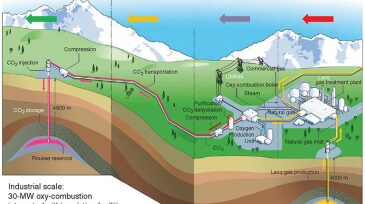
Total has been involved in CO2 injection and geological storage for more than 15 years, in Canada (Weyburn oil field) for enhanced oil recovery and in Norway (Sleipner and Snohvit fields) for aquifer storage.
-
Enhanced oil recovery processes, particularly offshore, create challenges for produced water treatment. This option reviews technology options and current applications.
-
This is the first of several articles on the subject of water management for unconventional hydraulic fracturing. This article outlines the critical issues and outlines development of a strategy for treatment of flowback fluids.
-
The Goliat field will be the first offshore oil field in the Barents Sea and the world’s northernmost offshore oil field.
-
The number of offshore facilities employing waterflooding with desalination continues to grow. Currently, more than 50 sulfate removal units are in operation offshore with a total capacity of approximately 8 million BWPD.
-
The burning of oil in place (in situ) on water is a viable means of mitigating the impact of marine oil spills. This paper examines decision criteria and safe practices for deploying this method in both icy and warm conditions.
-
The challenges the industry faces are not only or even primarily technical—they have to do with how the industry sees and communicates with the public, and with demands from the public to have a voice in decision making. This article explores the barriers to engaging with the public.