HSE & Sustainability

As drilling operations become increasingly digital, computer vision is emerging as a continuous safety layer that complements, not replaces, established safety practices. The challenge is no longer whether artificial intelligence can detect hazards, but how operators should deploy, integrate, and govern these systems to improve safety without adding operational comple…

New geothermal technical content and programming will highlight knowledge transfer among oil and gas and geothermal professionals.

This paper presents laboratory-testing methods and evaluation criteria designed to improve understanding of both the origin and extent of formation damage associated with CO2 injection.
-
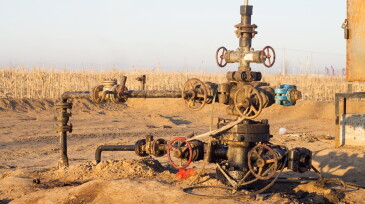
 The National Academies of Sciences, Engineering, and Medicine recommend continued state and federal funding, data-sharing, and new technologies to mitigate the risks posed by orphan wells.
 -
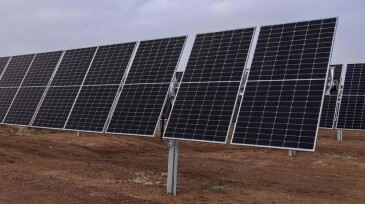
The Pinnington project in North Texas is the company’s largest solar project in the state and brings Repsol’s renewable energy generation capacity in the US to greater than 2 GW.
-
The California Resources Corporation achieved the state’s first carbon dioxide injection into two depleted reservoirs with the potential to store 38 million tonnes.
-
The new technology, recently highlighted at OTC, has received a statement of maturity from ABS.
-
Research by Enervus sees early 2026 permitting activity for the carbon capture and storage wells pointing to a growing approval queue, even while the rate of applications eases.
-
The new guidelines were released prior to reports that enhanced geothermal developer Fervo Energy experienced a blowout in Utah with no reported injuries.
-
This paper presents a case study of oriented tubing-conveyed perforation followed by an acidizing operation to overcome technical challenges posed by a depleted reservoir targeted for a carbon capture, utilization, and storage project.
-
This paper reviews existing literature, the operator’s records, service-company data, and simulation studies to assess the risk of using seawater in carbonate acidizing.
-
This guest editorial from the Center for Injection and Seismicity Research (CISR) at The University of Texas at Austin details the emerging risks posed by injection in Texas and what steps might be taken to mitigate them.
-
New technical papers suggest advanced robotic systems may not be far away from broad adoption for a large share of offshore inspection and intervention.