HSE & Sustainability

LibertyStream has signed a feedstock agreement with Goodnight Midstream to support its first commercial lithium carbonate facility in North Dakota's Bakken, advancing plans to extract battery-grade lithium from produced water.

The transition away from materials that contain per- and polyfluoroalkyl substances (PFAS), co-called forever chemicals, creates an opportunity to preserve historical information. Information that appears to have little operational value today may later become important when organizations need to evaluate past PFAS use. Once that information is lost, recreating it may…

TotalEnergies signed off for 30% operated stakes in the Lang Lebah and B14 gas fields offshore Sarawak on the sidelines of ADIPEC in Abu Dhabi, while also highlighting methane-reduction partnerships in Angola, India, and Southeast Asia.
-
 Technology is evolving to meet the challenges to automate water separation and purification in deepwater for environmentally safe discharge at the seabed. To solve these problems the best available solutions must be selected and the technology gaps must be identified and closed.
-
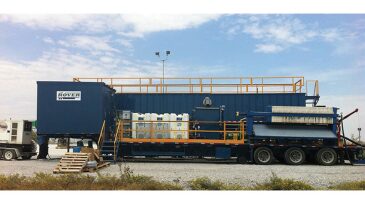
In this second article of a series covering water management in hydraulic fracturing (HF) in unconventional resources, the properties and characteristics of the flowback fluids are discussed, together with the general categories of technologies that are best suited to treat them.
-
OTC recognized three figures who have contributed to facilities engineering: Dendy Sloan, Jim Brill, and Ken Arnold. They were recognized with the Distinguished Achievement Awards for their technical and leadership contributions to the industry.
-
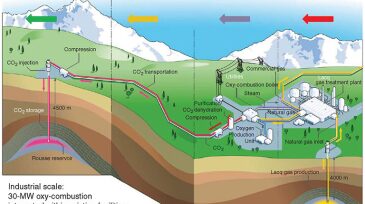
Several geological settings are appropriate for geological storage of carbon dioxide (CO2), including depleted oil and gas reservoirs, deep brine-saturated formations, CO2-flood enhanced-oil-recovery (EOR) operations, and enhanced coalbed-methane recovery.
-
Total has been involved in CO2 injection and geological storage for more than 15 years, in Canada (Weyburn oil field) for enhanced oil recovery and in Norway (Sleipner and Snohvit fields) for aquifer storage.
-
Enhanced oil recovery processes, particularly offshore, create challenges for produced water treatment. This option reviews technology options and current applications.
-
This is the first of several articles on the subject of water management for unconventional hydraulic fracturing. This article outlines the critical issues and outlines development of a strategy for treatment of flowback fluids.
-
The Goliat field will be the first offshore oil field in the Barents Sea and the world’s northernmost offshore oil field.
-
The number of offshore facilities employing waterflooding with desalination continues to grow. Currently, more than 50 sulfate removal units are in operation offshore with a total capacity of approximately 8 million BWPD.
-
The burning of oil in place (in situ) on water is a viable means of mitigating the impact of marine oil spills. This paper examines decision criteria and safe practices for deploying this method in both icy and warm conditions.