HSE & Sustainability

Modeling solubility trapping at reservoir scale remains a key challenge for carbon storage projects. This study introduces a novel sub-grid convective mixing model, implemented in the Open Porous Media Flow simulator and applied to the SPE11 benchmark, that enables accurate prediction of carbon dioxide dissolution trapping in geological storage using computationally e…

SPE’s newly renamed Safety Technical Section expands the reach of human factors by integrating safety, risk management, and system resilience expertise while preserving dedicated leadership and technical focus.

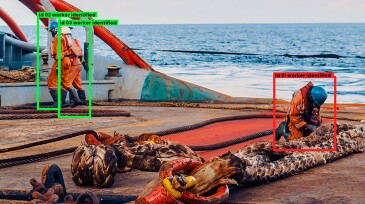
As drilling operations become increasingly digital, computer vision is emerging as a continuous safety layer that complements, not replaces, established safety practices. The challenge is no longer whether artificial intelligence can detect hazards, but how operators should deploy, integrate, and govern these systems to improve safety without adding operational comple…
-
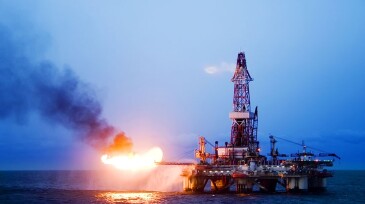
 Greenhouse gases are woven into every stage of a well’s life, which presents challenges that demand creative solutions that do not require too much capital.
 -
The energy world is rapidly changing. The pressure to address climate change, ensure reliable energy supplies, and manage costs is greater than ever.
-
From optimizing drilling performance to enhancing worker safety, computer vision can change how the industry works.
-
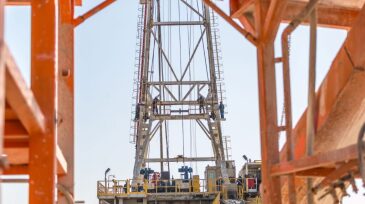
Located 230 km south of Abu Dhabi, the onshore Shah field produces around 70,000 B/D of crude.
-
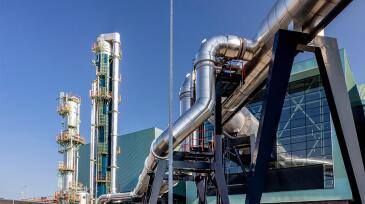
The plant is designed to capture up to 100,000 tonnes of carbon dioxide annually for the Netherlands-based sustainable energy supplier Twence.
-
The first-of-its-kind map highlights areas of interest for this potential source of energy and chemical supply.
-
Wood Mackenzie reports that prices would need to rise, capital discipline would need to evolve, and spending would need to increase by 30% for the upstream sector to meet demand in a delayed energy transition scenario.
-
The update is designed to improve the accuracy and completeness of reported data, reduce the time needed to complete the form, and support deeper understanding of equipment failures.
-
A new modeling tool examines the pathways and technology necessary for California to reach carbon neutrality economywide by 2045.
-
A recent study highlights the major challenges the technology faces as operators consider the pros and cons of using additive manufactured parts in a corrosion-prone environment.