Inspection/maintenance

From AI-enabled walking rigs to subsea drones and autonomous inspection robots, robotics is rapidly moving from pilot projects to field deployment. The technology promises not only greater efficiency but also a fundamental shift in how the industry approaches safety and asset management.

This paper introduces in-pipe inspection technologies enabling high-resolution digital measurements of tubular internal diameter and wall thickness for critical downhole applications.
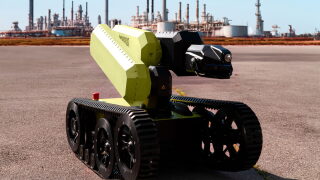
The deployment of a new heavy-duty robotic system aims to reduce workforce exposure to high-risk areas while improving detection of potential leaks.
-
 The American National Standards Institute accredited three of the American Petroleum Institute’s inspector certifications for pressure vessels, piping, and aboveground storage tanks.
 -
Saudi Aramco is accelerating the adoption and scaleup of disruptive and multipurpose robotic technologies to deliver safer, cost-effective, and efficient inspection capabilities, emergency response, aerial mapping, project monitoring, security surveillance, and environmental monitoring.
-
An autonomous robot will be deployed on an offshore platform for the first time by Equinor. The operator plans to use it as its eyes and sensors on future platforms where humans will visit only intermittently.
-
The paper describes the steps that have already been taken to create an industry-wide group that includes operators, class regulators, and service providers to agree on the primary challenges and to encourage development of practical solutions in a cost-efficient way.
-
On the normally unmanned Valhall Flank West platform, the survey of a 1-year-old box boom pedestal crane featured auto-testing of the automatic overload protection system. A similar inspection program was performed on two knuckle boom cranes on a FPSO vessel in Skarv.
-
Monitoring of corrosion in process pipelines has always been of paramount importance in ensuring plant-asset integrity. Similarly, steam traps play an important role in ensuring steam quality and, thus, the integrity of critical assets in the plant.
-
The service company says its engageSubsea Remote platform provides real-time equipment-status information.
-
The Abu Dhabi National Oil Company announced that it has completed the first phase of its large-scale multiyear predictive maintenance project, which aims to maximize asset efficiency and integrity across its upstream and downstream operations.
-
Phase 1 covers the modeling and monitoring of assets for six ADNOC Group companies. The four phases of the project are expected to be completed by 2022.
-
The data have been collected and analyzed from more than 18,000 equipment units with failure and maintenance records and includes information on subsea fields with more than 2,000 years of operating experience.