LNG

Shell has reached FID on LNG Canada Phase 2, a major expansion that will double the Kitimat facility’s LNG export capacity to 28 mtpa and strengthen long-term supply to growing Asian markets.
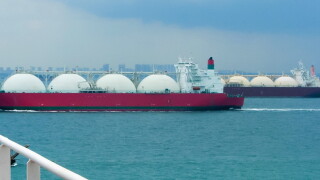
Increased capacity from new terminals and expansions drove up exports of liquefied natural gas at the quickest rate since 2016.

While discussions on the commercial terms for gas sales continue, the release of the jackup rig intended to drill production wells calls into question Shell’s plans for first gas in 2027.
-
 This paper discusses the objectives of the Fiber-Optic Leak-Detection (FOLD) project, carried out in Verneuil-en-Halatte, France.
 -
A new steel plate for LNG storage tanks has been developed by optimizing chemical composition and applying recent thermomechanical-control-process (TMCP) technology.
-
Natural gas had a bullish year in 2016 as the average Henry Hub spot price jumped from USD 2.28/million Btu in January to USD 3.59/million Btu in December, according to the Energy Information Administration. It also positively forecast that the gas price will rise to USD 3.67/million Btu in 2017.
-
This paper describes a split-process FLNG design where primary production and gas-treatment functions are provided on a host platform while liquefaction occurs on a separate vessel.
-
Douglas Westwoods' world FLNG market forecast for the period 2016-2022. A stormy ride is expected for the LNG industry, as the fall in natural gas prices limits investment in capital-intensive liquefaction projects.
-
Approximately 5% of world annual gas production is being flared or vented. This is equivalent to approximately 110–140 billion m3 (Bcm) of gas, and equates to the combined gas consumption of Central and South America in 2013.
-
Despite the currently deteriorating oil and gas prices, natural gas, the “least carbon-intensive” fossil fuel, is still projected by ExxonMobil, the International Energy Agency, and other sources to grow by 65% from 2010 to 2040
-
This paper presents an overview of the challenges of using traditional synthesis gas reforming methods for efficient gas-to-liquids (GTL) conversion.
-
Achieving production and availability targets is paramount to the ultimate success of any liquefied-natural-gas (LNG) project. Both are important factors in any life-cycle economic analysis.
-
The constraints of space and seaworthiness required the designers of Shell’s joint-venture floating-liquefied-natural-gas (FLNG) facility to assemble these technologies in novel configurations.