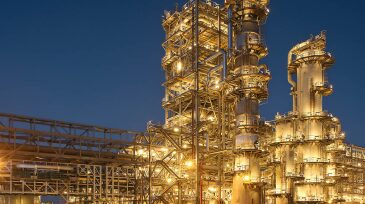
LNG

Shell has reached FID on LNG Canada Phase 2, a major expansion that will double the Kitimat facility’s LNG export capacity to 28 mtpa and strengthen long-term supply to growing Asian markets.
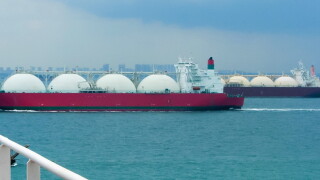
Increased capacity from new terminals and expansions drove up exports of liquefied natural gas at the quickest rate since 2016.
While discussions on the commercial terms for gas sales continue, the release of the jackup rig intended to drill production wells calls into question Shell’s plans for first gas in 2027.
-
 Conventional wisdom implies that natural-gas demand will continue to grow, especially in locations where coal is being phased out, nuclear growth has slowed/reversed, and renewables remain a small and intermittent energy source for the foreseeable future.
 -
Floating LNG (FLNG) units have a higher risk of explosion than onshore plants because of the limited and congested environment on the ship. This paper focuses on proper design to address this hazard.
-
This paper provides a benchmarking of different cryogenic tanks in terms of operation life and type of containment (single- vs. double-containment tanks) in the LNG industry. The different options adopted to recertify these tanks are covered.
-
There are already many floating liquefied-natural-gas (LNG) receiving terminals operating successfully in the world. The economics of floating LNG (FLNG) is compelling. Major cost savings can be achieved by the streamlining allowed by FLNG processes.
-
Carbon-molecular-sieve membranes (CMSMs) are a promising candidate for natural-gas purification because of their excellent stability, permeation selectivity, and permeability.
-
Small- and medium-scale liquefied natural gas (LNG) is different from conventional LNG in trading distances, target markets, and application areas. Small- and medium-scale LNG may better coordinate needs between regional gas producers and consumers.
-
Among the top 10 largest discoveries in 2013, half of them are natural-gas discoveries and all of them are in offshore environments, primarily in Africa, Far East Asia, and transcontinental countries, with estimated resources of more than 4,000 million BOE.
-
Growing world demand for natural gas will drive increases in capital expenditures on LNG through 2019.
-
Roughly one-half of global gas reserves are considered stranded gas--uneconomical because of the remote location of potential markets, lack of economic transportation and infrastructure, or the lack of conversion technology. An FPSO with gas to liquids conversion is an option for stranded gas.
-
LNG will increasingly be the way to bring stranded gas to market so that it can meet demands for clean-burning fuels. LNG basics for engineers was the subject of a recent webinar presentation.