LNG

After a record year for LNG project approvals in 2025, multiyear repairs to war-damaged liquefaction facilities in Qatar and the UAE threaten to slow the growth of global LNG capacity.

The Coral Norte FLNG is to be the mirror image of the Coral Sul unit, which shipped its first cargo in 2022 after it was put into service in Area 4 offshore Mozambique.
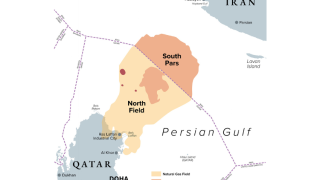
Barzan plant explosion that killed 13 and injured 66 occurred 2 days after production was restarted following a scheduled shutdown in December for routine maintenance.
-
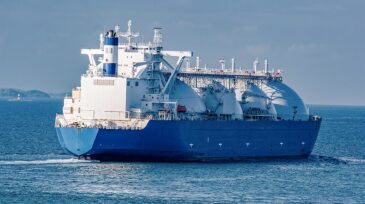
 LNG as a fuel source has been an energy staple for many Asia-Pacific countries for decades, and is increasing in importance in other regions as countries look to diversify their energy mix.
 -
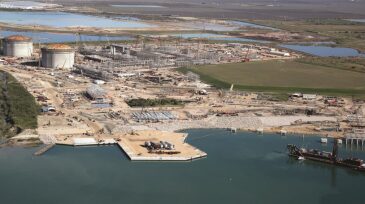
The US is emerging as a gas-exporting nation, and that is going to mean big changes globally.
-
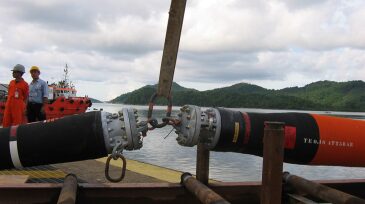
Global trade for LNG is projected to rise by 50% by 2020. There is a clear acceleration in demand for small- and medium-scale LNG, necessitating splitting of LNG into smaller load parcels. Transfer methods applicable to deeper water, smaller LNG carriers, and harsh environments are critical.
-
Petronas cancels plans for the development of the Pacific Northwest LNG project in British Columbia intended to take away natural gas from the Montney formation for shipping to Asian countries. Low LNG prices strike a blow to the feasibility of the project.
-
Cost and delivery of long-distance natural gas pipelines to a distant liquefaction facility at a warm-water port has become excessive, and environmental restraints have been increasing. An alternative is an offshore ice-resistant LNG port accommodating a new class of LNG transport vessels.
-
One of the world’s leading energy watchers says the second shale revolution will come in the form of LNG exports.
-
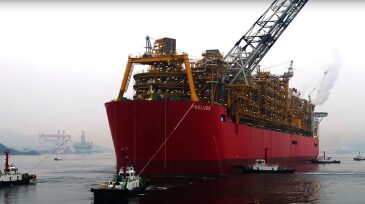
The Prelude FLNG begins the 3,600-mile journey from South Korea to northwest Australia; expected to remain at final destination for 20–25 years.
-
Eni finalized a USD 7-billion investment in the Coral South FLNG project, the first offshore development in Mozambique. Service and equipment providers are announcing their awarded contracts.
-
This paper discusses the objectives of the Fiber-Optic Leak-Detection (FOLD) project, carried out in Verneuil-en-Halatte, France.
-
A new steel plate for LNG storage tanks has been developed by optimizing chemical composition and applying recent thermomechanical-control-process (TMCP) technology.