Asset Management

This article from Murphy Oil outlines a modernization effort that resulted in increased scenario simulation capacity by five to 10 times.

The transaction is expected to strengthen the company's position in Alberta’s oil sands and unlock annual synergies of $54 million.

The transition away from materials that contain per- and polyfluoroalkyl substances (PFAS), co-called forever chemicals, creates an opportunity to preserve historical information. Information that appears to have little operational value today may later become important when organizations need to evaluate past PFAS use. Once that information is lost, recreating it may…
-
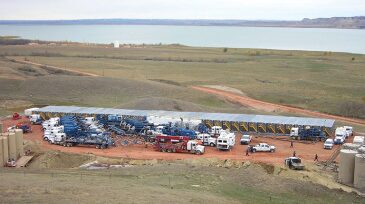
 Tests showing increased recoveries in the Bakken formation using CO2 could have significant implications for the upstream oil and gas industry.
-
Much like a character in a novel, a young professional can build their career character.
-
A condensed version of what is on the minds of SPE’s technical directors is: The industry needs multidisciplinary, data-driven ways to adapt to what is ahead, focus on what is critical for decision making, and take a long view as another generation takes over.
-
The challenges in achieving effective communication between facilities and reservoir engineers were addressed during a dinner and panel session held during the SPE Annual Technical Conference and Exhibition in October.
-
Oxane Materials' advanced cerammic proppant travels farther during fracturing in larger quantities, thereby leading to smoother, higher flows of oil and gas.
-
The rapid growth of progressing cavity pumps is an example of how new uses continue to emerge for older technology.
-
This paper describes Royal Dutch Shell’s approach to developing the pipeline of technical professionals.
-
Technical master classes (TMCs) are a new training concept designed to accelerate building expertise among geoscience, engineering, and commercial professionals.
-
This paper presents the results of student competitions held at Clausthal University of Technology.
-
We are comfortable with the reality of swift intuitive judgement being the primary decision-making approach of experienced engineers in emergency situations. But as the engineer in the situation has less experience available to him/her, how do psychological factors affect outcomes?