Asset Management

The Federal Reserve Bank of Dallas’ third-quarter energy survey reflects industry views on the drawdown of the US Strategic Petroleum Reserve, the outlook for Persian Gulf crude exports, and expectations for oil prices.

This paper presents an approach for safe, efficient, and cost-effective legacy well reabandonment.

This paper presents a flexible, highly cost- and energy-efficient method of gas separation and CO₂ capture from many different gas mixtures with a large range of CO₂ concentrations.
-
 A 25% tariff on steel imported into the US has some US oil and gas companies nervous about future spending plans.
 -
Amia Morgan, SPE, highlights this event designed to bring together students, young professionals, and seasoned industry experts to foster mentorship, inspire the next generation of STEM leaders, and promote inclusivity.
-
Launch of development drilling marks a new milestone as Romania aspires to become EU’s largest gas producer.
-
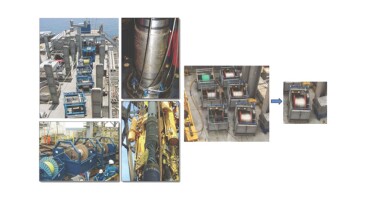
This paper describes an intelligent completion system in the context of multiple wells that, by electrifying the process, replaces the conventional electrohydraulic systems that have been in use for decades.
-
Whether it’s reviving inactive gas-condensate wells or identifying overlooked reserves in brownfields, operators are making the most of older wells and fields.
-
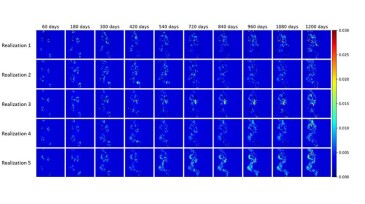
In this study, a deep-neural-network-based workflow with enhanced efficiency and scalability is developed for solving complex history-matching problems.
-
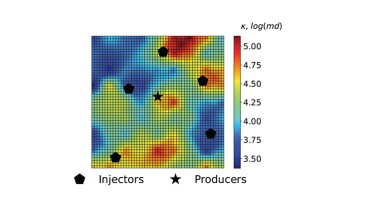
This study presents a production-optimization method that uses a deep-learning-based proxy model for the prediction of state variables and well outputs to solve nonlinearly constrained optimization with geological uncertainty.
-
Updates about global exploration and production activities and developments.
-
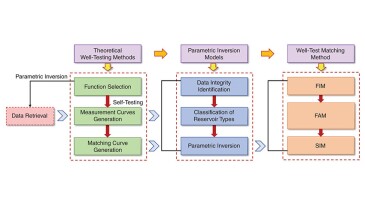
The paper describes a parameter inversion of reservoirs based on featured points, using a semi-iterative well-test-curve-matching approach that addresses problems of imbalanced inversion accuracy and efficiency.
-
Written on behalf of the SPE Business and Leadership Committee, this article explores the four generations in the upstream energy workforce, highlighting their unique traits and the impact of 40 years of industry changes. It also discusses how DEI, reverse mentoring, and employee resource groups can bridge generational gaps to boost collaboration and productivity in t…