Asset Management
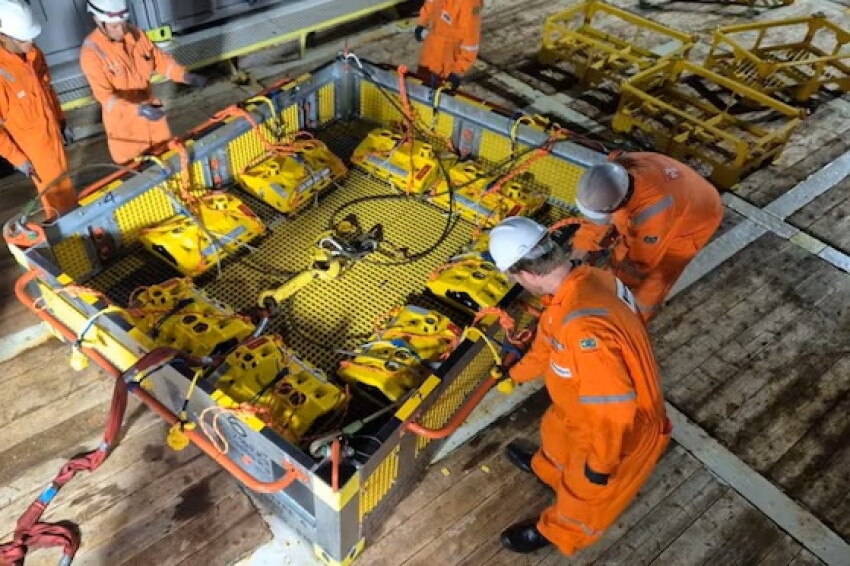
The technology has passed its first phase of qualification, with 84 nodes placed on the seafloor at a depth of 2,000 m to acquire 4D seismic data in the pre-salt Santos Basin.

Assets consolidated into the Searah JV include Eni-operated deepwater gas-condensate developments in the Kutei Basin, offshore East Kalimantan, Indonesia.

Five agreements target more than 11 Tcf of offshore gas and include flare-reduction technology.
-
 Expected to be commissioned in 2027, the new pipeline will double the UAE's current capacity of 1.8 million B/D of crude that can be transported beyond the contested waterway.
 -
Analysis from Wood Mackenzie warns that a prolonged closure of the critical waterway would have lasting effects on the global economy and Middle East supply capacity.
-
Caturus Energy’s platform integrates upstream assets from the Haynesville and East Texas basins with downstream liquefaction and export terminal facilities on Louisiana’s Gulf Coast.
-
After a decade and a half of declining production, Uzbekistan, ranked 15th worldwide in gas output, has been seeking foreign partners to revive and reverse the fortunes of its oil and gas industry.
-
While often associated with smaller discoveries, subsea tiebacks are playing a growing role in contributing to the broader energy mix.
-
The Houston-based enhanced geothermal developer scored $1.9 billion in an initial public offering, positioning it to expand projects in Utah and Nevada.
-
Working with Dell Technologies and NVIDIA, the French supermajor is targeting improved seismic processing and artificial intelligence applications.
-
Equinor generated its first revenue from the Adura joint venture with Shell, formed in late 2025, highlighting strong early cash flow from key UK fields including Mariner and Buzzard.
-
Acting director of the new center Ale Hakala outlines the research priorities guiding the newly established center’s focus on production enhancement technologies.
-
AI‑driven data center growth is straining US power grids and accelerating interest in enhanced geothermal systems as a scalable, low‑carbon solution.