Asset Management

Lower operating expenditures and a changing asset mix helped UKCS operators cut average production costs by 9% year over year, despite relatively flat production levels, according to the NSTA.

The deal adds 40,000 B/D of production and epands Cenovus’ SAGD footprint with three Alberta assets.

The Federal Reserve Bank of Dallas’ third-quarter energy survey reflects industry views on the drawdown of the US Strategic Petroleum Reserve, the outlook for Persian Gulf crude exports, and expectations for oil prices.
-
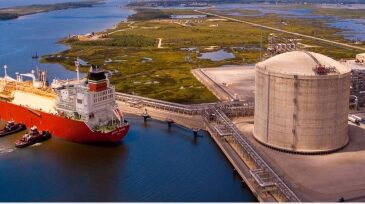
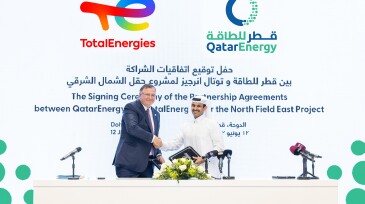
 Eni and ConocoPhillips will join TotalEnergies as international partners with QatarEnergy on the North Field East Expansion, the world’s single largest LNG project ever.
 -
Sempra lands partners for a CCS deal in Louisiana, while Shell eyes newbuild ships for CCS transport. An offshore alliance targets floating wind technology, and global hydrogen projects gain momentum in the UAE, Africa, and Brazil.
-
TotalEnergies has purchased a 25% stake in India’s Adani New Industries Ltd., creating a partnership to produce and commercialize green hydrogen globally.
-
Gentari aims to develop and deliver conventional renewable energy, hydrogen, and electric vehicle solutions in Asia Pacific and beyond.
-
QatarEnergy has tapped TotalEnergies as its first international joint venture partner for the North Field East expansion—the world’s largest LNG project ever.
-
In a new report from DNV, global hydrogen production is projected to increase by an order of magnitude from 2030 to 2050. But it will still not be enough to satisfy net-zero targets.
-
The UK supermajor is selling off its Sunrise oil sands stake for cash, interest in the undeveloped Bay du Nord complex off Newfoundland.
-
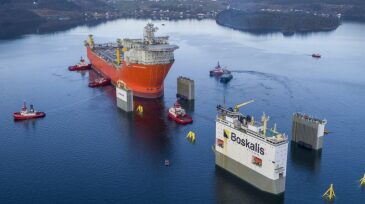
Johan Castberg is the biggest oil field to ever be discovered in the Barents Sea, but a constellation of satellite fields are likely needed to keep the development afloat.
-
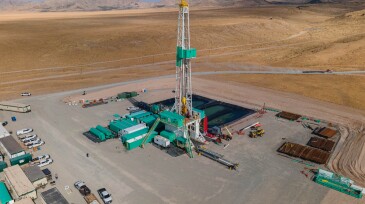
Hitting the next well during fracturing happens all the time. Predictably doing that on a large scale in granite looks a lot harder.
-
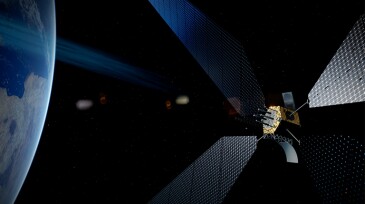
NASA, the European Space Agency, and the British government are reconsidering an old idea to beam space-based solar energy to Earth in light of new technologies that might lead to commercial feasibility.