Oilfield chemistry

This paper presents an experiment investigating dissolution of basaltic primary minerals and conditions favorable for secondary phase formation under deep subsurface storage conditions.

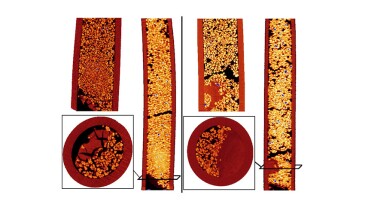
This study aims to investigate the efficacy of chemical additives strontium chloride and barium hydroxide in accelerating CO₂ trapping mechanisms, their effect on dissolution of carbonate-bearing minerals, and resulting poroelastic changes in the host rock.

This study reviews subsurface microbial activity, biomineralization reactions, and mechanisms prevalent for bioremediating wells, stabilizing cements, and increasing trapping during CO₂ injection and storage.
-
 The authors of this paper aim to design, optimize, and evaluate a scalable and energy-efficient plasma-driven advanced-oxidative-process system for produced-water remediation, emphasizing regulatory compliance for safe discharge or reuse.
 -
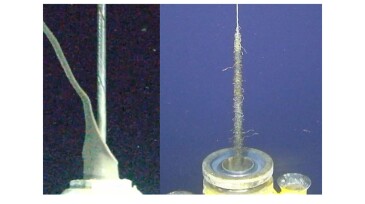
A new tubing-conveyed tool combines wellbore cleanout with multi-tracer deployment for production diagnostics and reservoir monitoring.
-
This study compares water-based chemicals including surfactants, nanoparticles, and ketones that can be used for enhancing the oil recovery of shale-oil reservoirs.
-
The experience captured in this paper illustrates the potential of deepwater riserless wireline subsea intervention capability and the fact that it can be expanded beyond hydraulic-only, simple mechanical, and plugging-and-abandonment scopes.
-
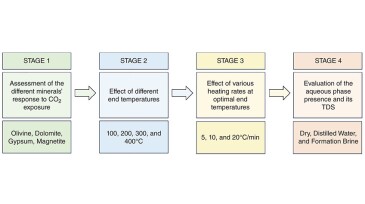
This paper presents a novel methodology for assessing the rapid mineral carbonation of carbon dioxide through geochemical interactions with carbon-, magnesium-, and iron-rich minerals abundant in geological formations.
-
This study contributes to enhancing the understanding of scale-inhibitor retention in rock formations.
-
This paper details the formulation and characterization of a novel nanoparticle system composed of polyethyleneimine and dextran sulfate for direct lithium extraction from bulk oilfield brines in North America.
-
This comprehensive study on microbial control in unconventional facilities allows for the integration of molecular microbiology, chemical treatments, and production engineering to develop specific strategies to control microbial communities and reduce corrosion rates that affect the integrity of the facilities.
-
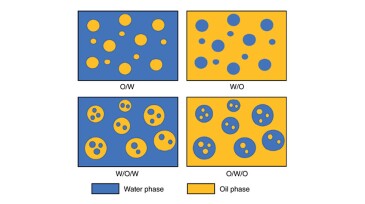
This study presents the development of a novel modeling tool designed to predict condensate emulsions, focusing on key factors causing emulsions such as pH, solid content, asphaltene concentration, droplet size, and organic acids.
-
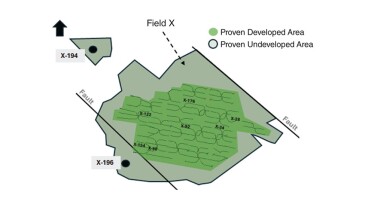
This study leverages oil-fingerprinting technology and geochemical data to evaluate the fluid connectivity between a main field and its stepout wells.