Onshore/Offshore Facilities

Despite significant progress in capturing associated gas for domestic use, Iraq remains the world’s third-largest gas-flaring country as it aims for higher oil and gas production targets.

The 2026 Upstream Scale Guidelines establish a common workflow for field measurements, scale modeling, and risk assessment to support more consistent operational decisions.

Shell has reached FID on LNG Canada Phase 2, a major expansion that will double the Kitimat facility’s LNG export capacity to 28 mtpa and strengthen long-term supply to growing Asian markets.
-
 The export project in the US Gulf of Mexico could handle up to 13 mtpa of liquified natural gas.
 -
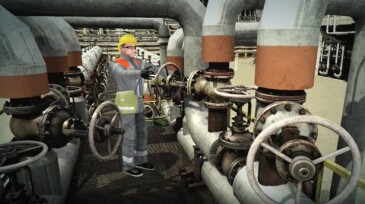
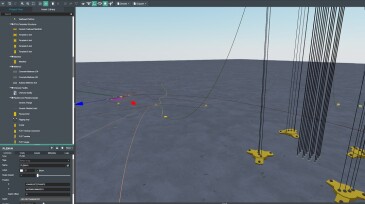
This paper presents a review of virtual reality (VR) in the oil and gas industry through the development of prototypes. The objective was to establish a learning experience and knowledge about VR’s main features, hardware, software, and applications; evaluate the capabilities of various VR solutions in the context of field operator and maintenance training; and develo…
-
Software company FutureOn and consulting firm Wood are working together on an enhanced digital service for asset operators.
-
Design, construction specialist books new work in the Middle East, Australia, and Saudi Arabia.
-
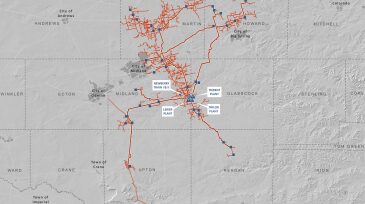
The acquisition gives Enterprise’s natural gas and NGL business an entry point into the Midland Basin.
-
New projects coming on line throughout the year will vault the nation ahead of Australia and Qatar.
-
The authors present an artificial-intelligence and machine-learning technology to obtain a high-level, comprehensive view of all equipment in a facility to detect and map corrosion.
-
This paper describes a method to determine rig state from camera footage using machine-learning-based vision-analytics approaches.
-
The plan includes the development and operation of a first-of-its-kind high-voltage, direct-current (HVDC-VSC) subsea transmission system in the Middle East and North Africa region.
-
Natural gas delivered as LNG to growing economies in Asia has a strong role to play in achieving net zero in carbon emissions, and most of that gas will come from unconventional resources.