Onshore/Offshore Facilities

Despite significant progress in capturing associated gas for domestic use, Iraq remains the world’s third-largest gas-flaring country as it aims for higher oil and gas production targets.

Shell has reached FID on LNG Canada Phase 2, a major expansion that will double the Kitimat facility’s LNG export capacity to 28 mtpa and strengthen long-term supply to growing Asian markets.

The 2026 Upstream Scale Guidelines establish a common workflow for field measurements, scale modeling, and risk assessment to support more consistent operational decisions.
-
 Brazilian state oil company will charter two pipelay support vessels for 3 years plus options.
 -
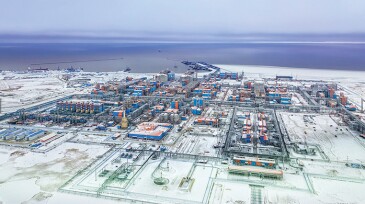
Russia is pouring investment into liquefied natural gas projects as it seeks to leverage the world’s largest natural gas reserves together with the logistical advantages of delivering it at a competitive price to Asia and Europe along the now-navigable Northern Sea Route.
-
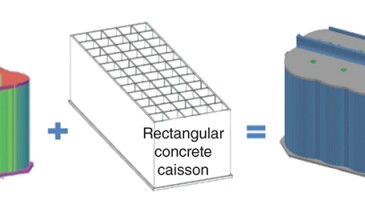
The authors write of an efficiency-optimization effort in the planning and construction of a West African breakwater for LNG service that resulted in increased financial and environmental benefits.
-
The complete paper discusses structural assessments for gravity-based structures, a topic that the authors write is underrepresented in the literature.
-
Brent crude oil price finally had reached $75/bbl at the time of writing. So far, this oil price is the highest since before the COVID-19 pandemic, which is a good sign that demand is picking up. Oil and gas offshore projects also seem to be picking up; most offshore greenfield projects are dictated by economics and the price of oil.
-
The paper focuses on a process developed to identify, evaluate, and eliminate interdependent bottlenecks on the Constitution platform and its flowline network.
-
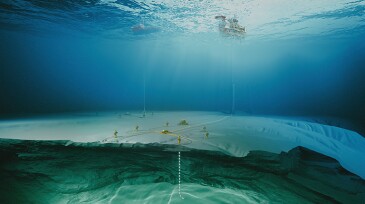
After more than 2 decades of talk, multiple millions of dollars in investments, and a decade’s worth of joint industry projects, operators are starting to get on board with electrification as the base case for subsea solutions.
-
The wells that were taken off line as a result of the blaze had been producing 421,000 B/D of oil.
-
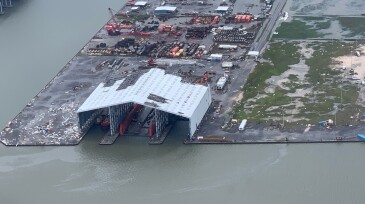
Port Fourchon is close to the offshore oil platforms in the US Gulf, but it is also at the southern edge of Louisiana where the land is fading away.
-
The project’s new wellhead platform will be powered by a renewable energy system.