Onshore/Offshore Facilities

The 2026 Upstream Scale Guidelines establish a common workflow for field measurements, scale modeling, and risk assessment to support more consistent operational decisions.

Shell has reached FID on LNG Canada Phase 2, a major expansion that will double the Kitimat facility’s LNG export capacity to 28 mtpa and strengthen long-term supply to growing Asian markets.

The long-term outlook analysis says a potential shift toward new construction could push 2026 production 3% above 2025 levels.
-
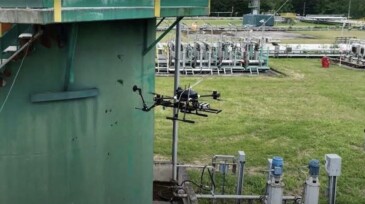
 A robotic arm, camera system, and virtual reality helped EniProgetti and University of Naples researchers overcome the major challenges of direct-contact nondestructive testing using a drone.
 -
Launch of development drilling marks a new milestone as Romania aspires to become EU’s largest gas producer.
-
US LNG exports to Asia rose from 3.1 Bcf/D in 2023 to 4 Bcf/D last year.
-
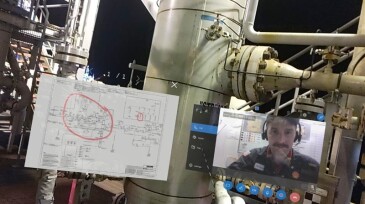
Shell’s combination of digital worker technologies enables collaborative troubleshooting and inspections while reducing travel and boosting efficiency.
-
Updates about global exploration and production activities and developments.
-
In the next 3 to 5 years, South America and the Middle East will lead global investment, driven by greenfield developments, exploration, and midstream infrastructure. Brazil’s growth is fueled by deepwater pre-salt projects, while the Middle East focuses on gas and LNG, especially in Qatar, Saudi Arabia, and the UAE.
-
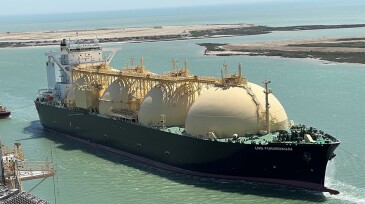
An oversupply of LNG carriers is putting downward pressure on charter rates, pushing them to historic lows. Newbuild LNG carrier deliveries have been outpacing the construction and permitting of new liquefaction facilities needed to support them.
-
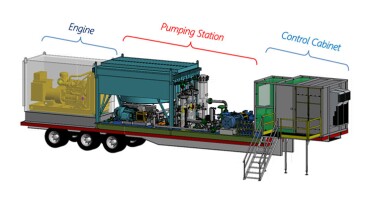
This article describes a technology combining a compression unit with a flexible line to offer a flaring alternative for transferring hydrocarbons.
-
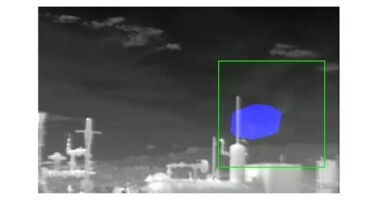
This paper describes a deep-learning image-processing model that uses videos captured by a specialized optical gas-imaging camera to detect natural gas leaks.
-
This paper describes an intelligent completion system in the context of multiple wells that, by electrifying the process, replaces the conventional electrohydraulic systems that have been in use for decades.