Onshore/Offshore Facilities

Despite significant progress in capturing associated gas for domestic use, Iraq remains the world’s third-largest gas-flaring country as it aims for higher oil and gas production targets.

The 2026 Upstream Scale Guidelines establish a common workflow for field measurements, scale modeling, and risk assessment to support more consistent operational decisions.

Shell has reached FID on LNG Canada Phase 2, a major expansion that will double the Kitimat facility’s LNG export capacity to 28 mtpa and strengthen long-term supply to growing Asian markets.
-
 More than 2.0 mtpa of LNG to come from Plaquemines LNG and CP2 LNG facilities.
 -
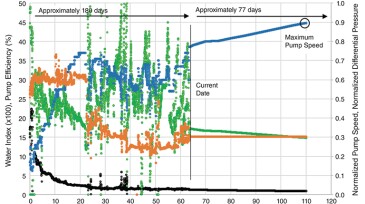
This paper presents a proposed condition indicator that estimates the wear experienced by an all-metal progressing cavity pump at any point in operation and takes into consideration the effects of downhole operating conditions.
-
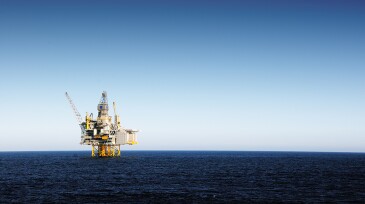
Over 1,000 hours of remotely monitored continuous production was achieved on an unmanned platform—a first for standalone offshore solids management in the North Sea.
-
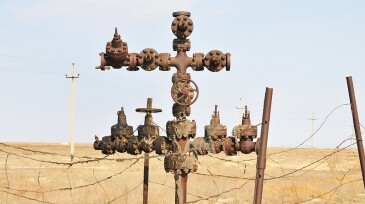
Federal infrastructure law gives states financial incentive to remediate orphan wells.
-
The paper presents predicted vs. measured wear for six wells in the Culzean field, a high-pressure/high-temperature gas condensate field in the central North Sea.
-
The authors of this paper discuss a biosurfactant treatment that offers an economical method for remediation of formation damage caused by high-molecular-weight paraffin wax deposition in porous media.
-
The authors of this paper describe the development of a continuous monitoring solution throughout its deployment.
-
Three-year plus options deal could generate around $50 million in revenues for subsea contractor.
-
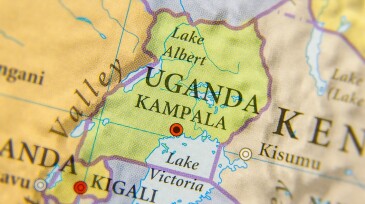
Uganda’s Lake Albert appears on track to first oil by 2025. The oil is expected to be exported via the 1443-km East Africa Crude Oil Pipeline.
-
Record prices and the need for energy security are driving US LNG market momentum.