Onshore/Offshore Facilities

The deal includes Waygate’s inspection portfolios and is expected to close later this year.

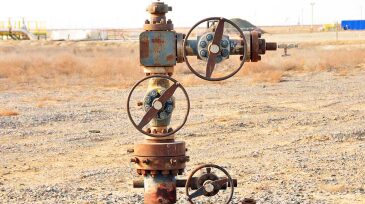
While Uzbekistan has seen a significant drop in flaring, methane leaks from deteriorating infrastructure continue to reveal themselves to satellites in space.

Analysts weigh near‑term risks for Middle East oil and gas producers after a tentative 2‑week ceasefire between the US‑Israeli coalition and Iran.
-
 Colorado Gov. John Hickenlooper has announced a 7-part plan to improve safety, with plugging of orphan wells at the top of the list.
 -
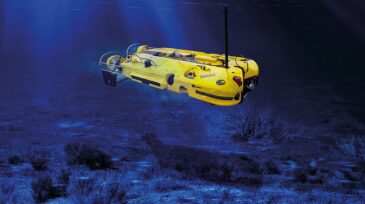
WiSub will lead a consortium with Statoil, Kongsberg, Saab, and other companies and universities to develop a standardized interface for AUV docking with subsea structures, as well as bi-directional power transfer to help charge sensor networks.
-
The US is emerging as a gas-exporting nation, and that is going to mean big changes globally.
-
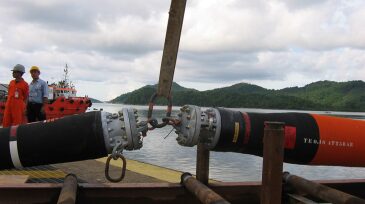
Global trade for LNG is projected to rise by 50% by 2020. There is a clear acceleration in demand for small- and medium-scale LNG, necessitating splitting of LNG into smaller load parcels. Transfer methods applicable to deeper water, smaller LNG carriers, and harsh environments are critical.
-
Emphasis on identifying more-efficient subsea boosting solutions has led to a number of initiatives in the industry.
-
This study examines how subsea processing (SSP) can develop into an important enabling technology for future ultradeepwater-field developments and long-distance tiebacks.
-
The costs of subsea boosting systems have been reduced by adopting three primary strategies: simplifying the system design to reduce weight and cost, simplifying the installation and intervention, and reducing complexity and risk.
-
Petronas cancels plans for the development of the Pacific Northwest LNG project in British Columbia intended to take away natural gas from the Montney formation for shipping to Asian countries. Low LNG prices strike a blow to the feasibility of the project.
-
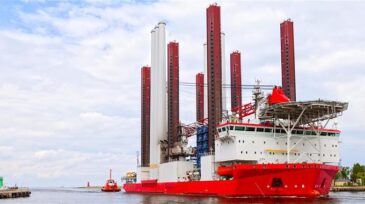
The top US wind power official told the offshore upstream sector that it can help build “smaller, leaner, and cheaper" wind turbine farms.
-
Part 2 of this two-part series presents a new methodology for sizing and rating three-phase separators based on quantifying the actual mechanisms and physics that govern separation performance. An example illustrates the calculations needed to achieve the specified outlet fluid qualities.