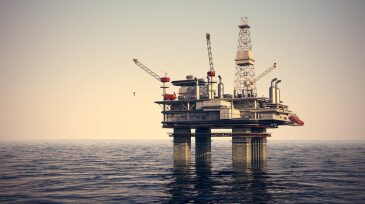
Onshore/Offshore Facilities

War‑related infrastructure damage is beginning to influence global energy supply chains in ways that could reshape project development and capacity growth.
Sulzer and JSIL are teaming up to provide the service for oil and gas, power generation, and industrial operations.

The deal includes Waygate’s inspection portfolios and is expected to close later this year.
-
 An ecosystem-based management program is described to assess the potential sensitivities and contribution of the platform as an artificial reef.
 -
After initial exploration, a prospect deep in the Amazon jungle was declared non-commercial. The authors discuss how the initial project planning contributed to the decommissioning effort by means of life-cycle planning.
-
Efficient separation assumes uniform flow, but the reality of inlet geometries can invalidate this assumption, leading to separation problems and loss of separation efficiency.
-
Projects are being delayed or deferred due to low oil prices, which is affecting the market for subsea, umbilicals, risers, and flowlines (SURF).
-
More precise measurement can create a dilemma. One example is the precise fluid flow measurements used to control managed pressure drilling (MPD) systems.
-
In this paper, an analysis of the selection of integrated template structures (ITSs) for Arctic environments is presented.
-
This paper describes the architecture of the Lucius Gulf of Mexico subsea production system and the drivers behind it.
-
This paper addresses the standardized features applied to the 10,000-psi-rated subsea-system components at the Espirito Santos FPSO in the Campos basin offshore Brazil.
-
The need for standardization of subsea equipment has never been greater. With the drop in oil prices, cost reduction has become critical.
-
Floating LNG (FLNG) units have a higher risk of explosion than onshore plants because of the limited and congested environment on the ship. This paper focuses on proper design to address this hazard.