Onshore/Offshore Facilities

This paper presents a flexible, highly cost- and energy-efficient method of gas separation and CO₂ capture from many different gas mixtures with a large range of CO₂ concentrations.

This paper introduces channel stacking, a novel and efficient methodology designed to significantly improve optical gas imaging-based leak detection.

As the pace of new discoveries slows and high-quality prospects become harder to find, oil companies may need to rely more heavily on mature fields to maintain production and support future supply.
-
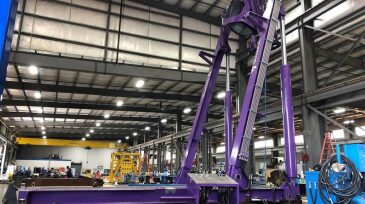
 The A-frame is DNV certified. TechnipFMC’s ROVs will deploy in GoM later this year.
 -
This paper presents a fatigue-prediction methodology designed to extend the life of unbonded flexible risers and improve the accuracy of floating production, storage, and offloading vessel response analysis.
-
This study used ultrasonic logging to evaluate reference barrier cells constructed with known defects. The cell concept was developed with an emphasis on low cost and ease of use.
-
Researchers use novel methodology to measure the thermo-electric properties of native crude.
-
Prophets of doom have argued that there will be no cyclical upturn this time, that conventional offshore oil and gas developments, with the odd exception, have been squeezed out of the cost curve by the rise of tight oil. Yet there are signs of recovery that might breathe life back into the sector.
-
The single independent riser (SIR) is a hybrid riser configuration optimized for ultradeepwater field development. The SIR is composed of a flexible jumper and a rigid part vertically tensioned by means of distributed or continuous buoyancy.
-
This paper describes an automated work flow that uses sensor data and machine-learning (ML) algorithms to predict and identify root causes of impending and unplanned shutdown events and provide actionable insights.
-
Gecko Robotics is providing the energy industry with artificial-intelligence-enabled robots to inspect infrastructure and supply massive amounts of data to help predict failures before they occur.
-
The tank dome roof and secured marine perimeter come 8 months after the Calcasieu Project reached FID. It also comes less than a month after completing a successful string test of the refrigerant compression system.
-
Material selection is a first line of defense against corrosion. This article reviews how to recognize pitting and crevice corrosion, as well as how to optimize tubing material selections for marine oil and gas applications based on the material’s PREN value.