Onshore/Offshore Facilities

Argentina’s President Javier Milei met with TotalEnergies CEO Patrick Pouyanné and Eni CEO Claudio Descalzi in Paris to discuss Argentina’s energy sector, including projects linked to the Vaca Muerta shale formation and the development of the Argentina LNG export project.

The Absheron gas field expansion will supply additional natural gas to Azerbaijan’s domestic market and support its export commitments to Turkey, allowing Baku to stay focused on meeting its gas export obligations to Europe.
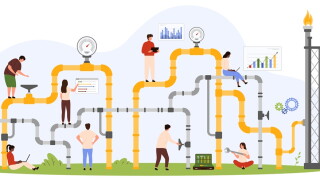
A credible custody-transfer record depends on far more than the accuracy of a single meter. It is the product of an integrated measurement chain. While meter performance supports measurement-system integrity, commercial confidence also depends on traceability, governance, and authorization.
-
 In recent years, an unprecedented upsurge in offshore field-development activity has been driven largely by the corresponding sustained surge in oil price on world markets.
 -
Vibration-induced fatigue failures of pipework smallbore connections result in elevated safety risks and costly interruptions to normal operations. A common cause is poor design. This article discusses design considerations to avoid these failures.
-
This paper focuses on the applicability of subsea processing technology employing multiphase pumps to develop marginal fields commercially. Analytical methods were used to evaluate the pumps, and the results were validated through case studies in specific fields.
-
As environments become more challenging, the importance and complexity of flow assurance has evolved. To effectively manage flow assurance, oil and gas operators must take a holistic approach, particularly when working in deepwater offshore environments.
-
The growing amount of heavy crude processed worldwide has created additional separation challenges, leading some operators to turn to alternative technologies. In some cases, electrocoalescence has been an effective tool to separate oil from water.
-
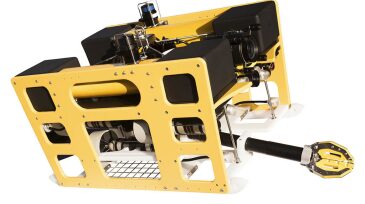
Expenditure is forecast to increase more than operational days because of the move toward deeper waters and more complicated offshore field development programs, which demand higher specification, higher cost ROVs.
-
A recent webinar focused on hydrocyclones and their application for offshore oil and water separation. The discussion includes fundamental science, practical considerations, implementation and field experience.
-
Robotic submarines, capable of operating by themselves thousands of feet underwater for months or perhaps years at a time, are under development as the vanguard of tomorrow’s subsea oil and gas fields.
-
Industry perceives decommissioning projects as more risky and uncertain than capital projects. Several recent decommissioning projects delivered in an immature marketplace seem to support this view.
-
Advances in modeling techniques allow quantitative prediction of long-term trends in cuttings-pile characteristics and environmental risks, providing firm direction in mitigating risks.