Onshore/Offshore Facilities

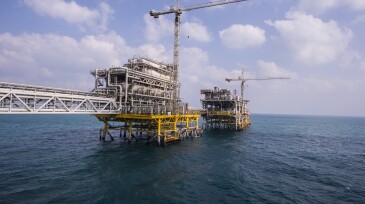
The Absheron gas field expansion will supply additional natural gas to Azerbaijan’s domestic market and support its export commitments to Turkey, allowing Baku to stay focused on meeting its gas export obligations to Europe.

A credible custody-transfer record depends on far more than the accuracy of a single meter. It is the product of an integrated measurement chain. While meter performance supports measurement-system integrity, commercial confidence also depends on traceability, governance, and authorization.

Despite significant progress in capturing associated gas for domestic use, Iraq remains the world’s third-largest gas-flaring country as it aims for higher oil and gas production targets.
-
 A new report from Rystad Energy expects more than $200 billion will flow into greenfield offshore projects over the next 2 years.
 -
The Agogo Integrated West Hub Development Project is the first new major greenfield project awarded in Angola in more than 5 years.
-
More than 2.0 mtpa of LNG to come from Plaquemines LNG and CP2 LNG facilities.
-
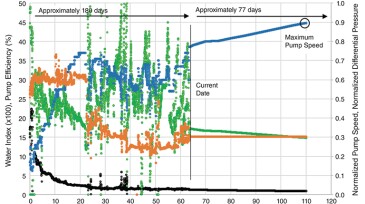
This paper presents a proposed condition indicator that estimates the wear experienced by an all-metal progressing cavity pump at any point in operation and takes into consideration the effects of downhole operating conditions.
-
Over 1,000 hours of remotely monitored continuous production was achieved on an unmanned platform—a first for standalone offshore solids management in the North Sea.
-
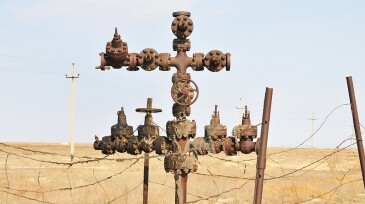
Federal infrastructure law gives states financial incentive to remediate orphan wells.
-
The paper presents predicted vs. measured wear for six wells in the Culzean field, a high-pressure/high-temperature gas condensate field in the central North Sea.
-
The authors of this paper discuss a biosurfactant treatment that offers an economical method for remediation of formation damage caused by high-molecular-weight paraffin wax deposition in porous media.
-
The authors of this paper describe the development of a continuous monitoring solution throughout its deployment.
-
Three-year plus options deal could generate around $50 million in revenues for subsea contractor.