Onshore/Offshore Facilities

Argentina’s President Javier Milei met with TotalEnergies CEO Patrick Pouyanné and Eni CEO Claudio Descalzi in Paris to discuss Argentina’s energy sector, including projects linked to the Vaca Muerta shale formation and the development of the Argentina LNG export project.

The Absheron gas field expansion will supply additional natural gas to Azerbaijan’s domestic market and support its export commitments to Turkey, allowing Baku to stay focused on meeting its gas export obligations to Europe.
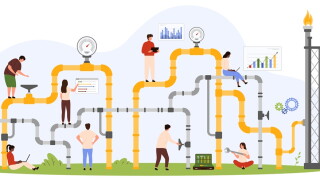
A credible custody-transfer record depends on far more than the accuracy of a single meter. It is the product of an integrated measurement chain. While meter performance supports measurement-system integrity, commercial confidence also depends on traceability, governance, and authorization.
-
 Tellurian CEO Meg Gentle outlined how the US LNG market should address expected tight market conditions through 2025 while managing a transition to a carbon neutral environment.
 -
The pipeline continues to operate as courts weigh expedited appeals from the Army Corp of Engineers and Energy Transfer.
-
The maritime technology company successfully completed a remote deadweight audit for a semisubmersible oil and gas drilling rig. Believed to be the first of its kind, the remote survey was developed in response to travel and social-distancing restrictions imposed during the COVID-19 pandemic.
-
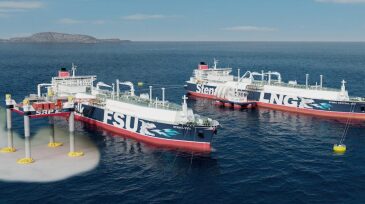
The metocean and tidal conditions led to the development of the jetty-less solution for the project, which Delta Offshore continues to push toward FID.
-
Winning innovators focused on environment, safety, and operational efficiency.
-
The COVID-19 pandemic accelerates transformative moments, particularly the search for the best strategy and innovation to secure offshore megaprojects not underpinned by higher oil prices.
-
The complete paper is a comprehensive discussion of the development and deployment of the tension leg platform (TLP), one of the four major platform types that also include floating production, storage, and offloading (FPSO) vessels; semisubmersible floating production systems; and spar platforms.
-
The complete paper is an extensive review of the evolution of spar designs, focusing on the progression of work that ultimately led to the application of a transformative concept to the oil industry.
-
In the complete paper, the authors seek to understand the effect of triazine on the electrochemical response of a carbon-steel surface in a mixed-gas system.
-
A platform connecting to the Garden Banks pipeline was undamaged by Hurricane Laura, but Enbridge declared force majeure after inspecting the facilities.