Onshore/Offshore Facilities

Argentina’s President Javier Milei met with TotalEnergies CEO Patrick Pouyanné and Eni CEO Claudio Descalzi in Paris to discuss Argentina’s energy sector, including projects linked to the Vaca Muerta shale formation and the development of the Argentina LNG export project.

The Absheron gas field expansion will supply additional natural gas to Azerbaijan’s domestic market and support its export commitments to Turkey, allowing Baku to stay focused on meeting its gas export obligations to Europe.
A credible custody-transfer record depends on far more than the accuracy of a single meter. It is the product of an integrated measurement chain. While meter performance supports measurement-system integrity, commercial confidence also depends on traceability, governance, and authorization.
-
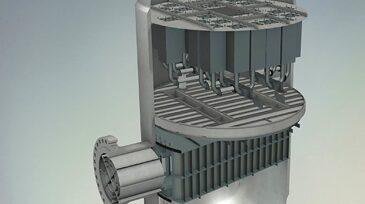
 The main drivers for sizing gas scrubbers have been performance requirements, process conditions, and project specifications. However, optimizing cost, delivery times, and weight is not the same as improving scrubber performance.
-
An experimental study was conducted by use of a 6-in.-inner-diameter facility to analyze three-phase stratified wavy flow in horizontal pipelines.
-
A RPSEA project identified the gaps in technology that are the most pressing for multiphase-flow measurement.
-
To help lower costs of offshore projects, DNV GL has launched initiatives focused on the use of composite components.
-
It was my pleasure to go through 169 papers submitted to SPE in this field over the past year and select three for inclusion in this issue as well as three for additional reading.
-
The constraints of space and seaworthiness required the designers of Shell’s joint-venture floating-liquefied-natural-gas (FLNG) facility to assemble these technologies in novel configurations.
-
The sources and magnitude of shear and the effects on oil droplet size can have significant consequences for downstream separation equipment performance.
-
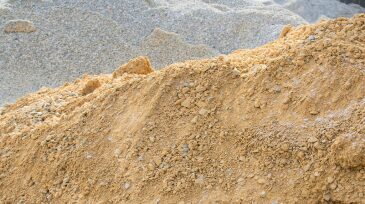
Oil and gas wells often produce sand or solids with the well fluids. Despite exclusionary well designs, these solids can cause equipment failure, completion problems, or changes in production. This paper offers a way to remove solids in separators.
-
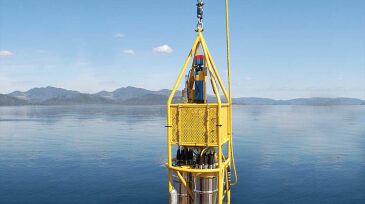
Deepwater production has become more reliant on the integrity of subsea, umbilical, riser, and flowline (SURF) systems. A JIP explored cost-effective inspection and maintenance options.
-
In trying to reduce the footprint of facilities, operators often select the wrong piping components, hampering the performance. Selection of the right piping can avoid separation issues.