Onshore/Offshore Facilities

The events will be co-located 3–5 May 2027 at Reliant Park in Houston, Texas.

The supermajor said the fields are not expected to contribute meaningfully to its production profile by 2030.
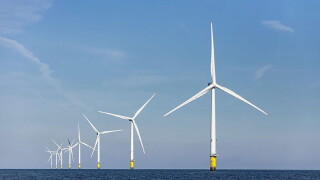
The US federal government is working to stymie offshore wind power, but proponents aren’t going quietly. Armed with data, they are taking on a sea of misinformation and hostility to defend the burgeoning resource in the US, while the rest of the world moves ahead briskly.
-
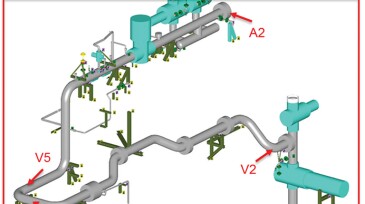
 A combination of computational-fluid-dynamics and finite-element modeling offers a potentially powerful tool for assessing and diagnosing multiphase-flow-induced vibration problems in hydrocarbon-production piping systems.
 -
Innovative elements of digitalization and automation of workflows provide a new approach for better handling of slugging in subsea developments with long tiebacks, potentially optimizing production and limiting the amount of flaring.
-
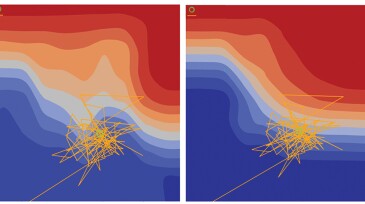
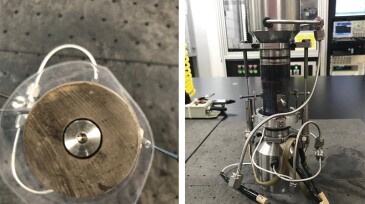
The complete paper presents the results of an investigation into the creep behavior of North Sea shales and their ability to form effective annular barriers.
-
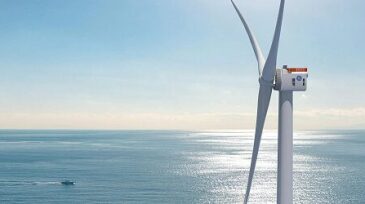
The first offshore wind turbine installation vessel in the US is one of the largest of its kind in the world.
-
The service company says its engageSubsea Remote platform provides real-time equipment-status information.
-
Shale-based associated gas production is behind the phenomenon. When oil prices do not support production, associated natural gas production also stops, with little to no consideration of natural gas prices.
-
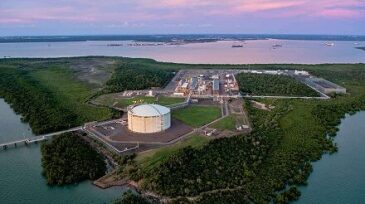
The agreement takes 80% of Santos’ share of expected gas from Barossa annually for 10 years.
-
The Italian oil and gas major has taken on a 20% stake in the first two phases of the project, which ultimately will be run by Equinor.
-
The complete paper presents a rigorous and consistent method to convert daily separator rates into stock-tank volumes. Recommendations for developing field-specific shrinkage correlations using field test data also are proposed.
-
The objective of the complete paper is to investigate and analyze energy-saving and process-optimization opportunities in upstream surface facilities, from downhole to the gas/oil separation plants (GOSPs), using a value-methodology approach.